
10 Worst Injuries in NFL History: Shocking and Devastating Moments
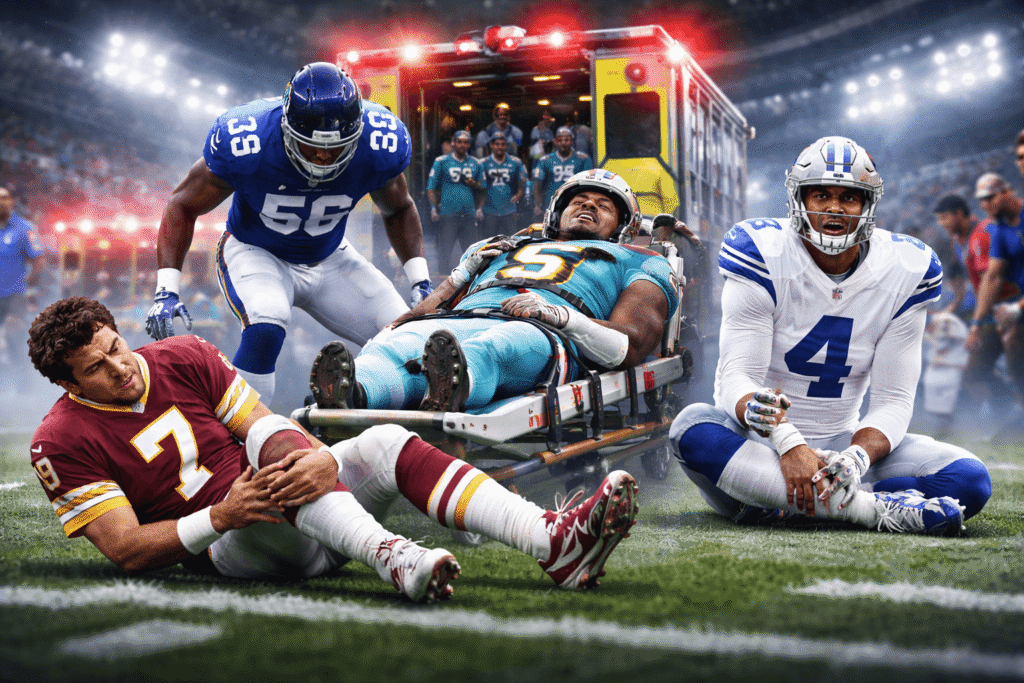
The NFL is a league known for its intensity and physicality, where the stakes are high and the risks even higher. Over the years, we’ve witnessed some of the most thrilling plays and breathtaking moments. However, along with the glory comes the agony of injuries. Some injuries not only end careers but also have a lasting impact on players’ lives. Here, we delve into ten of the worst injuries in NFL history, highlighting their severity and the stories behind them. Joe Theismann’s Leg Injury (1985) One of the most infamous injuries in NFL history occurred on November 18, 1985. Washington Redskins quarterback Joe Theismann suffered a gruesome leg injury during a game against the New York Giants. Lawrence Taylor, a linebacker for the Giants, sacked Theismann, causing a compound fracture of his tibia and fibula. The injury was so severe that it effectively ended Theismann’s career. The image of Theismann’s leg bending unnaturally remains one of the most haunting in sports history. Darryl Stingley’s Paralysis (1978) Darryl Stingley, a wide receiver for the New England Patriots, experienced one of the most tragic injuries in NFL history. During a preseason game against the Oakland Raiders in 1978, Stingley was hit by Jack Tatum. The collision resulted in Stingley suffering two fractured vertebrae and a compressed spinal cord, leaving him paralyzed from the chest down. This injury brought significant attention to the dangers of the game and the need for safer play. Bo Jackson’s Hip Injury (1991) Bo Jackson was a dual-sport star, excelling in both baseball and football. His football career, however, was cut short due to a severe hip injury. In a 1991 playoff game, Jackson dislocated his hip during a tackle. This injury led to avascular necrosis, causing the bone tissue to die due to lack of blood supply. Despite attempting a comeback, Jackson’s football career was effectively over, though he continued to play baseball for several more years. Johnny Knox’s Spinal Injury (2011) Chicago Bears wide receiver Johnny Knox suffered a career-ending spinal injury on December 18, 2011. During a game against the Seattle Seahawks, Knox was hit hard, causing his body to bend backward in an unnatural position. He fractured a vertebra and required spinal fusion surgery. Despite a long and arduous recovery process, Knox was never able to return to the field, marking the end of his NFL career. Reggie Brown’s Spinal Cord Injury (1997) In December 1997, Detroit Lions linebacker Reggie Brown suffered a life-threatening spinal cord injury during a game against the New York Jets. Brown attempted to make a tackle and ended up with his head colliding with another player’s thigh, resulting in a severe neck injury. He lost consciousness and had to be resuscitated on the field. The injury ended his football career, but thankfully, Brown recovered enough to lead a normal life afterward. Dennis Byrd’s Paralysis (1992) New York Jets defensive end Dennis Byrd’s career was abruptly ended on November 29, 1992, when he collided with a teammate while trying to sack the opposing quarterback. The collision resulted in a broken neck and temporary paralysis. Although Byrd was told he might never walk again, he made a miraculous recovery, regaining his ability to walk but never returning to professional football. Napoleon McCallum’s Knee Injury (1994) In a Monday Night Football game in 1994, Los Angeles Raiders running back Napoleon McCallum suffered a devastating knee injury. As he was tackled, McCallum’s leg bent backward grotesquely, tearing multiple ligaments, rupturing an artery, and severely damaging the nerve. The injury was so severe that it not only ended his football career but also nearly led to the amputation of his leg. Kevin Everett’s Spinal Cord Injury (2007) Buffalo Bills tight end Kevin Everett’s career-ending injury occurred during the 2007 season opener. After making a tackle on a kickoff return, Everett fell to the ground motionless. He had suffered a severe spinal cord injury that initially left him paralyzed. Immediate and innovative medical intervention, including the use of cold therapy to reduce swelling, allowed Everett to regain movement and eventually walk again, though he never played football again. Eric LeGrand’s Paralysis (2010) In October 2010, while playing for Rutgers University, Eric LeGrand suffered a severe spinal cord injury during a game against Army. The collision left him paralyzed from the neck down. His injury, while occurring in college, is often discussed in the context of the NFL due to the similarities in the level of play and the risks involved. LeGrand has since become an inspirational figure, advocating for spinal cord injury research and recovery. Alex Smith’s Leg Injury (2018) Washington Redskins quarterback Alex Smith experienced a life-threatening leg injury on November 18, 2018. During a game against the Houston Texans, Smith was sacked and suffered a compound fracture of his tibia and fibula, reminiscent of Joe Theismann’s injury 33 years earlier to the day. Complications arose, including infections that required 17 surgeries and nearly led to an amputation. Remarkably, Smith made an incredible comeback, returning to play in the NFL in 2020 before retiring. The Human Toll of Football These injuries underscore the brutal nature of professional football. While the sport brings excitement and joy to millions, it also carries significant risks for the athletes. The physical and emotional toll on players and their families is immense. Many of these injuries have led to improved safety protocols and changes in the rules to protect players better. However, the inherent danger remains a stark reminder of the price of glory in the NFL. In reflecting on these injuries, we see not only the physical damage but also the resilience and courage of these athletes. Their stories are a testament to the human spirit’s capacity to overcome adversity, adapt to new realities, and inspire others. Whether they managed to return to the game or transitioned to new paths in life, their experiences continue to impact the NFL and its fans profoundly.
History of Achilles Tears in NFL Quarterbacks | Recovery Journeys
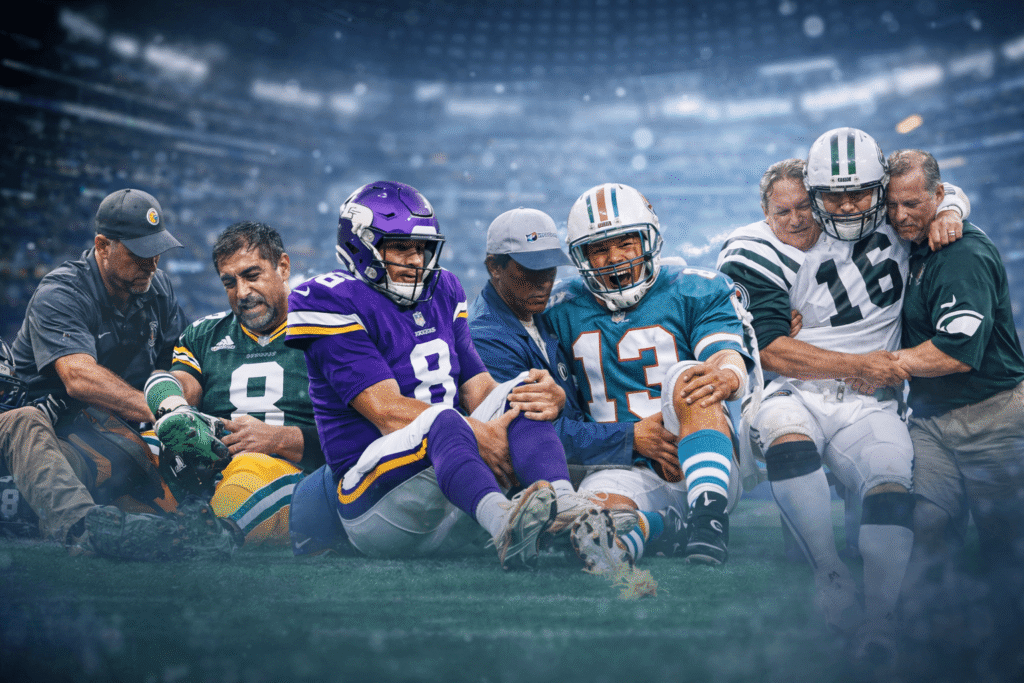
Achilles tendon injuries are among the most severe and career-threatening injuries in sports, particularly for NFL quarterbacks. The history of Achilles tears among quarterbacks is a tale of adversity, resilience, and medical advancements. This blog delves into the notable instances of Achilles injuries in NFL quarterbacks, the impact on their careers, and how modern medicine has improved recovery prospects. Early Instances and Career Impact The Achilles tendon, connecting the calf muscles to the heel bone, is crucial for walking, running, and jumping. An Achilles tear can be devastating for any athlete, especially a quarterback who relies heavily on mobility and stability. In the early days of the NFL, an Achilles tear often meant the end of a player’s career due to the limited medical technology and rehabilitation methods available. One of the earliest high-profile cases was that of Dan Marino, the legendary Miami Dolphins quarterback. In 1993, Marino suffered a complete tear of his Achilles tendon, a significant injury that raised doubts about his future in the league. However, Marino’s determination and the medical care he received allowed him to return to the field the following season. While he never fully regained his pre-injury mobility, Marino continued to perform at a high level, proving that recovery was possible even in the early 90s. The Evolution of Medical Treatment The treatment and rehabilitation of Achilles tendon injuries have seen significant advancements over the decades. In the 1990s, surgery was the primary option, often followed by a long and grueling rehabilitation process. Despite the advancements, the recovery was uncertain, and many players were unable to return to their pre-injury form. The turn of the century brought new techniques and better outcomes. The use of minimally invasive surgical methods, improved rehabilitation protocols, and advanced physiotherapy techniques have dramatically enhanced recovery prospects. This evolution is evident in the cases of several quarterbacks who have suffered Achilles injuries in the past two decades. Notable Cases in the Modern Era Dan Marino Achilles Injury (1993) Dan Marino, one of the most iconic quarterbacks in NFL history, faced a career-threatening Achilles injury in October, 1993, while playing for the Miami Dolphins. Marino tore his right Achilles tendon, an injury that required immediate surgical intervention. At the time, medical advancements were not as developed, making his return to the field uncertain. Marino missed the remainder of the season but defied expectations by returning the following year. Although he never fully regained his pre-injury mobility, Marino adapted his game and continued to perform at an elite level, demonstrating remarkable resilience and the importance of effective rehabilitation. Vinny Testaverde (1999) Vinny Testaverde, then a quarterback for the New York Jets, ruptured his Achilles tendon in the first game of the 1999 season. At 35, many thought his career was over. However, Testaverde made a remarkable recovery and returned to play in the NFL for several more seasons, demonstrating the improved surgical techniques and rehabilitation protocols of the late 1990s and early 2000s. Kirk Cousins Achilles Injury ( 2023) Kirk Cousins, the esteemed quarterback for the Minnesota Vikings, faced a devastating setback in October, 2023, when he tore his right Achilles tendon during Week 8 against the Green Bay Packers. This injury, classified as a Grade 3 Achilles tear, sidelined Cousins for the remainder of the 2023 NFL season. The severity of a Grade 3 tear involves a complete rupture of the tendon, necessitating surgical intervention followed by an extensive rehabilitation process. Cousins’ injury underscored the unpredictable and harsh realities of professional football, where even the most seasoned athletes can face career-threatening situations. His recovery journey will be closely watched as he navigates the challenging path back to the field. Aaron Rodgers (2023) One of the most recent and high-profile Achilles injuries occurred to Aaron Rodgers, the veteran quarterback for the New York Jets, in 2023. In a shocking turn of events, Rodgers tore his Achilles tendon just minutes into his debut game with the Jets. At 39 years old, this injury was particularly concerning given his age and the typical recovery timeline for Achilles injuries. Rodgers underwent surgery and immediately started a rigorous rehabilitation process. His recovery is being closely monitored, and there is cautious optimism about his return. Rodgers’ case highlights both the advances in medical treatment and the uncertainties that still exist with such severe injuries. Medical Advancements and Future Prospects The treatment of Achilles injuries has progressed significantly, with new surgical techniques, biologics, and rehabilitation protocols leading the way. Techniques such as platelet-rich plasma (PRP) injections and stem cell therapy are becoming more common, aiming to enhance healing and reduce recovery time. Additionally, the focus on personalized rehabilitation programs tailored to each athlete’s needs has improved outcomes. Modern physiotherapy incorporates advanced technologies like anti-gravity treadmills and aquatic therapy, allowing athletes to regain strength and mobility more effectively. The Psychological Aspect Recovery from an Achilles tear is not solely a physical challenge; the psychological aspect is equally crucial. Quarterbacks often face significant mental hurdles, including fear of re-injury and loss of confidence. Modern rehabilitation programs increasingly incorporate psychological support, helping athletes navigate the mental challenges of recovery. The history of Achilles tears in NFL quarterbacks is a journey through medical advancements and the indomitable spirit of athletes. From the early days when such an injury could end a career, to the modern era where recovery is not only possible but increasingly successful, the evolution is remarkable. Advancements in surgical techniques, rehabilitation protocols, and preventive care have transformed the landscape. NFL quarterbacks like Dan Marino, Vinny Testaverde, Jake Delhomme, Robert Griffin III, and others have shown that with the right treatment and support, returning to the field is achievable. As medical science continues to advance, the prospects for recovering from Achilles injuries will only improve, offering hope and opportunities for future generations of quarterbacks facing this challenging injury. The integration of physical and psychological rehabilitation will be key in ensuring that athletes not only recover but thrive post-injury, continuing to inspire fans and aspiring players alike.
Top 8 Common Injuries for Quarterbacks: Prevention & Treatment
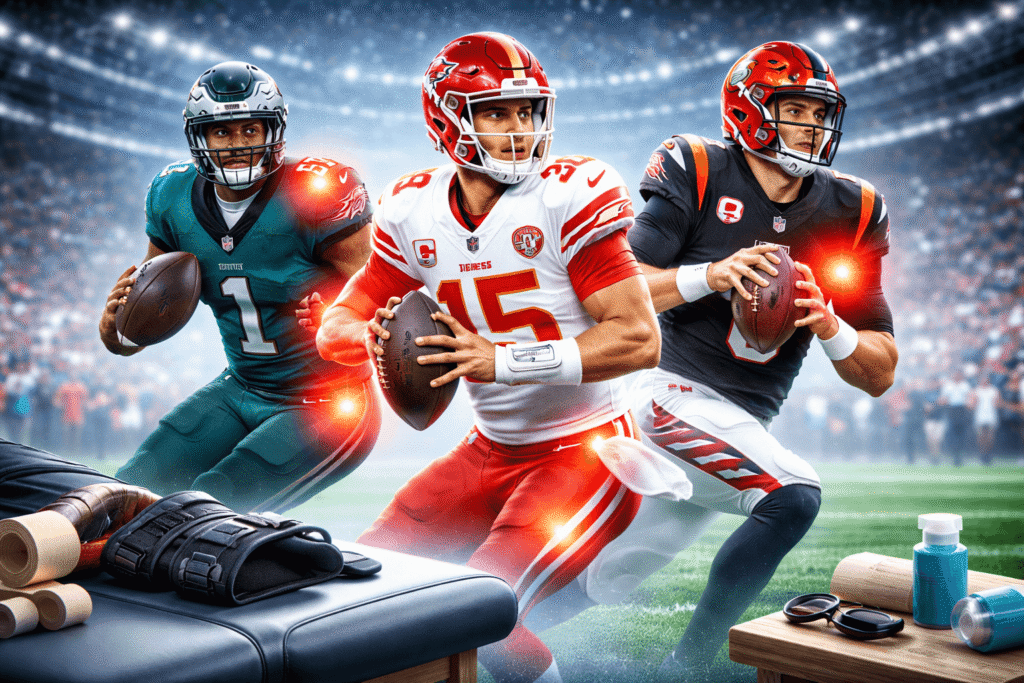
Quarterbacks play a critical role in football, often facing intense physical challenges that can lead to a variety of injuries. Here are the eight most common injuries that quarterbacks encounter, along with preventive measures and treatments. 1. Concussions Concussions are traumatic brain injuries caused by a blow to the head or body, leading to the brain moving rapidly inside the skull. Symptoms: Headaches Dizziness Nausea Confusion Memory loss Prevention and Treatment: Use of proper helmet fitting and techniques Immediate medical evaluation Rest and gradual return to play under medical supervision Example: An example is the concussion sustained by Tua Tagovailoa, the Miami Dolphins quarterback, which led to significant time away from the game to ensure full recovery. Shoulder Injuries Shoulder injuries, including rotator cuff tears and labrum tears, are common due to repetitive throwing motions and physical contact. Symptoms: Pain and swelling Limited range of motion Weakness in the shoulder Prevention and Treatment: Strengthening exercises for shoulder muscles Proper throwing mechanics Physical therapy and, in severe cases, surgery Example: Green Bay Packers quarterback Aaron Rodgers has faced multiple shoulder injuries throughout his career, emphasizing the importance of proper rehabilitation. Knee Injuries Knee injuries, such as ACL tears, MCL sprains, and meniscus tears, occur due to sudden changes in direction, tackles, and collisions. Symptoms: Swelling and pain Instability Difficulty bearing weight Prevention and Treatment: Use of knee braces during practice and games Strengthening exercises for knee stability Surgical repair and extensive rehabilitation Example: Tom Brady’s ACL tear in 2008 highlighted the potential severity of knee injuries for quarterbacks and the importance of effective recovery programs. 4. Ankle Sprains Ankle sprains result from the ligaments around the ankle being stretched or torn, often due to awkward landings or being tackled. Symptoms: Swelling and bruising Pain and tenderness Reduced mobility Prevention and Treatment:es Ankle strengthening and flexibility exercises Proper footwear and taping Rest, ice, compression, and elevation (RICE), along with physical therapy Example: Patrick Mahomes has dealt with ankle sprains that have impacted his play, underscoring the need for comprehensive ankle care. 5. Rib Injuries Rib injuries, including fractures and cartilage damage, occur from direct hits to the torso, common in high-impact collisions. Symptoms: Sharp pain in the rib area Difficulty breathing deeply Swelling and bruising Prevention and Treatment: Protective rib padding Avoiding direct hits through quick release of the ball Rest and pain management Example: Drew Brees suffered multiple rib fractures during his career, highlighting the need for effective protection and recovery strategies. 6. Elbow Injuries Elbow injuries, such as tendonitis and ligament tears, can result from repetitive throwing motions and overuse. Symptoms: Pain and tenderness around the elbow Swelling and reduced range of motion Weakness in the arm Prevention and Treatment: Proper warm-up and stretching routines Strengthening exercises for the arm muscles Rest, physical therapy, and in severe cases, surgery Example: Ben Roethlisberger’s elbow injury required surgery and extensive rehabilitation, demonstrating the serious nature of such injuries. 7. Hand and Finger Injuries Hand and finger injuries, including fractures and dislocations, are common due to the need to handle the ball and contact with helmets and ground. Symptoms: Pain and swelling Bruising and deformity Difficulty gripping or moving fingers Prevention and Treatment: Protective gloves Proper hand positioning and catching techniques Splinting, rest, and physical therapy Example: Russell Wilson has experienced finger dislocations, emphasizing the need for effective treatment and protective measures. 8. Hamstring Strains Hamstring strains occur when the muscles or tendons in the back of the thigh are overstretched or torn, often during sprinting or sudden movements. Symptoms: Sharp pain in the back of the thigh Swelling and bruising Difficulty walking or running Prevention and Treatment: Proper warm-up and stretching exercises Strengthening exercises for the hamstring muscles Rest, ice, compression, and elevation (RICE), along with physical therapy Example: Kyler Murray has dealt with hamstring strains, showing the importance of conditioning and careful management of such injuries. Quarterbacks face numerous physical challenges that make them prone to various injuries. By understanding these common injuries, their symptoms, and the best preventive and treatment strategies, players can better protect themselves and maintain their performance on the field. Proper training, conditioning, and medical care are essential for quarterbacks to minimize the risk of injury and ensure a long, successful career in football.
10 Worst Injuries for Running Backs: Career-Threatening Risks
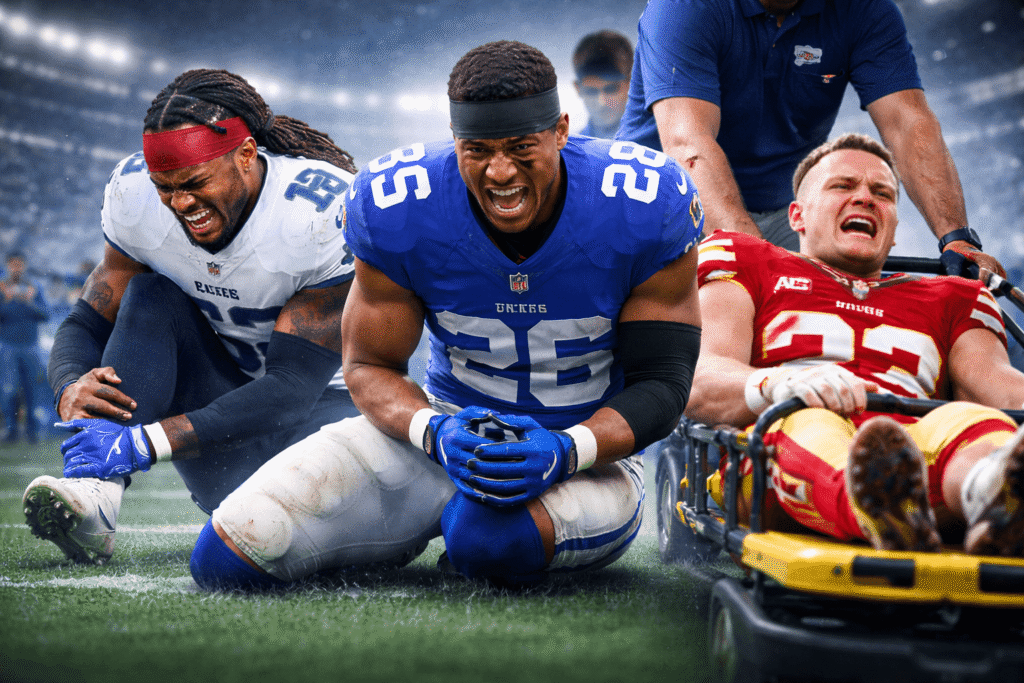
Running backs are often considered the workhorses of a football team, bearing the brunt of physical contact as they navigate through defenses. This demanding role subjects them to a high risk of injuries. Here, we explore some of the worst injuries running backs can suffer, their impact on careers, and recovery prospects. 1. ACL Tears Anatomy and Function The anterior cruciate ligament (ACL) is one of the key ligaments that stabilize the knee joint. It connects the thigh bone (femur) to the shin bone (tibia) and is crucial for movements involving sudden stops, starts, and changes in direction. Mechanism of Injury ACL tears commonly occur when a running back makes a rapid change in direction, stops suddenly, or lands awkwardly from a jump. The intense physical contact in football also increases the risk. Impact on Career An ACL tear is one of the most dreaded injuries for running backs. It typically requires surgical repair and a lengthy rehabilitation process, often sidelining players for nine to twelve months. While advancements in medical technology have improved recovery outcomes, the injury can still significantly affect a player’s performance and career longevity. Examples from 2022-2023: Breece Hall, Javonte Williams, Nick Chubb, Keaton Mitchell, Gus Edwards 2. Achilles Tendon Ruptures Anatomy and Function The Achilles tendon connects the calf muscles to the heel bone, facilitating walking, running, and jumping. Mechanism of Injury Ruptures often occur during activities that involve sudden acceleration or deceleration. For running backs, this can happen during explosive sprints or abrupt stops. Impact on Career Achilles tendon ruptures are severe and can be career-threatening. The recovery process is extensive, often requiring surgery followed by a year of rehabilitation. Even with successful recovery, players might not regain their pre-injury level of explosiveness and agility, which are critical for running backs. Examples from 2022-2023: Cam Akers, J.K. Dobbins, Marlon Mack 3. Meniscus Tears Anatomy and Function The menisci are two crescent-shaped cartilage discs that cushion and stabilize the knee joint, allowing for smooth movement and weight distribution. Mechanism of Injury Meniscus tears can occur due to twisting motions, direct impacts, or degenerative changes. Running backs are susceptible due to the high-impact nature of their position. Impact on Career Meniscus tears vary in severity. Minor tears might heal with conservative treatment, but severe tears often require surgery. Recovery can range from a few weeks to several months. Chronic meniscus issues can lead to long-term knee problems, affecting a running back’s performance and durability. Examples from 2022-2023: De’ Von Achane, Evan Hull, James Conner, Keaton Mitchell 4. High-Ankle Sprains Anatomy and Function A high-ankle sprain involves the ligaments that connect the tibia and fibula above the ankle joint. These ligaments stabilize the lower leg and ankle during movement. Mechanism of Injury High-ankle sprains typically occur when the foot is twisted outward, often during tackles or sudden direction changes. Impact on Career High-ankle sprains are particularly troublesome for running backs. They can be more painful and take longer to heal than regular ankle sprains. Recovery time ranges from several weeks to a few months, sometimes requiring surgery, and lingering instability or pain can hamper a player’s agility and speed. Examples from 2022-2023: Saquon Barkley, Jonathan Taylor, Alvin Kamara, Kyren Williams, Rhamondre Stevenson, David Montgomery, Jerome Ford, Khalil Herbert, Tony Pollard, Dameon Pierce 5. Concussions Anatomy and Function A concussion is a type of traumatic brain injury caused by a blow to the head or body that causes the brain to move rapidly within the skull. Mechanism of Injury Running backs are at high risk for concussions due to frequent collisions with defenders. Helmet-to-helmet hits and violent tackles are common causes. Impact on Career Concussions are increasingly recognized for their long-term impact on players’ health. Symptoms can include headaches, dizziness, memory issues, and cognitive impairments. Multiple concussions can lead to chronic traumatic encephalopathy (CTE), a degenerative brain disease. Managing concussions often involves strict protocols and can lead to extended absences from play. The long-term health risks make concussions a particularly serious concern. Examples from 2022-2023: Isaiah Pacheco, Joe Mixon, Gus Edwards 6. Shoulder Dislocations Anatomy and Function The shoulder joint is a ball-and-socket joint that allows for a wide range of motion but is prone to instability and dislocations. Mechanism of Injury Running backs can suffer shoulder dislocations from direct impacts, falls, or awkward tackles that force the arm into an unnatural position. Impact on Career A dislocated shoulder can cause significant pain and require immobilization. Repeated dislocations may necessitate surgical intervention to stabilize the joint. Recovery can take several months, and the risk of re-injury is high. Shoulder stability is crucial for ball security and absorbing tackles, making this injury particularly detrimental. Examples from 2022-2023: Isaiah Pacheco, Dalvin Cook 7. Hamstring Strains Anatomy and Function The hamstrings are a group of muscles at the back of the thigh responsible for bending the knee and extending the hip. Mechanism of Injury Hamstring strains occur due to overstretching or overloading the muscles, often during high-speed running or sudden acceleration. Impact on Career Hamstring strains vary in severity. Mild strains might heal in a few weeks, while severe strains can take months. Recurrence is common, and chronic hamstring issues can severely limit a running back’s speed and explosive power, essential attributes for the position. Examples from 2022-2023: Aaron Jones, Chuba Hubbard, Gus Edwards, Jerome Ford, Isaiah Pacheco, Kendre Miller, Brian Robinson Jr., Jaylen Warren, Jahymr Gibbs, Breece Hall 8. Turf Toe Anatomy and Function Turf toe is a sprain of the ligaments around the big toe joint, commonly caused by hyperextension. Mechanism of Injury Running backs often get turf toe when pushing off forcefully from a planted foot, especially on artificial turf surfaces. Impact on Career Turf toe can be deceptively debilitating. It causes significant pain and limits the ability to push off and change direction, critical movements for running backs. Recovery time can vary, with severe cases requiring several months and potentially leading to chronic issues. Examples from 2022-2023: Derrick Henry, Jonathan Taylor, Antonio Gibson, Gus Edwards 9.
Understanding the 7 Most Common Injuries for Wide Receivers
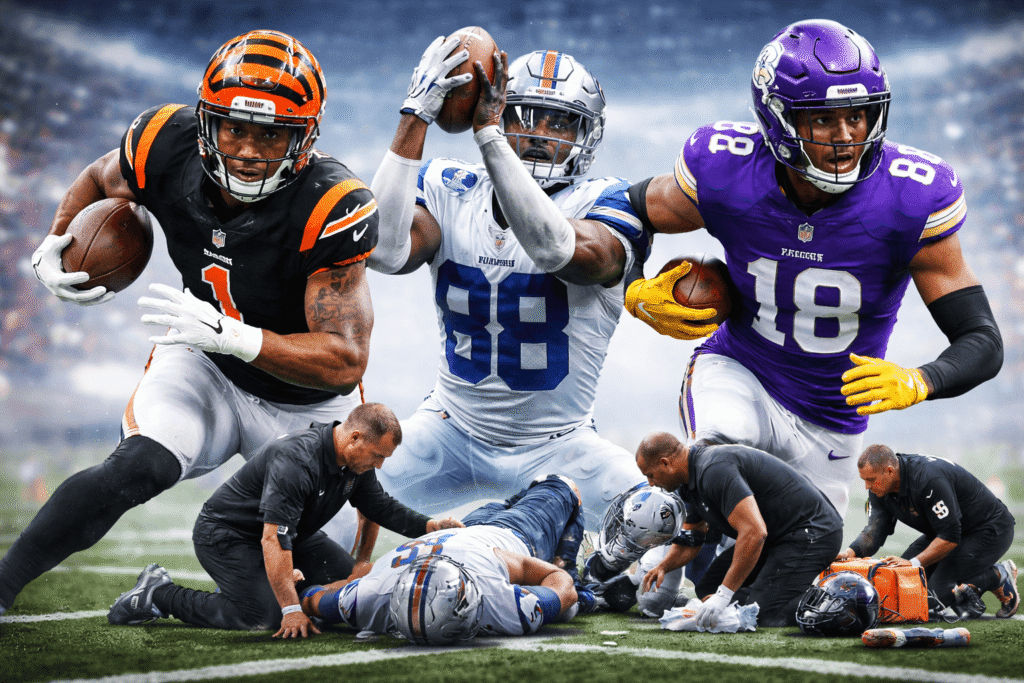
Wide receivers (WRs) play a crucial role in football, responsible for catching passes from the quarterback, gaining yardage, and scoring touchdowns. Due to the nature of their position, which involves high-speed sprints, abrupt changes in direction, and physical collisions, wide receivers are particularly prone to certain types of injuries. In this blog, we will explore the most common injuries faced by wide receivers, their causes, and preventive measures. 1. Hamstring Strains Hamstring strains are among the most frequent injuries sustained by wide receivers. These injuries occur when the muscles at the back of the thigh are overstretched or torn, often due to rapid acceleration or deceleration. The explosive sprints and sudden stops that WRs perform make them particularly susceptible to this injury. Symptoms and Treatment: Symptoms of a hamstring strain include sharp pain in the back of the thigh, swelling, and difficulty walking or running. Treatment typically involves rest, ice, compression, and elevation (RICE). Physical therapy may be necessary to strengthen the muscles and prevent future strains. Prevention: To prevent hamstring strains, WRs should incorporate regular stretching and strengthening exercises for their hamstrings and surrounding muscles. Warm-ups and cool-downs before and after practice sessions are also crucial. 2. Ankle Sprains Ankle sprains are another common injury for wide receivers. These occur when the ligaments in the ankle are stretched or torn, often due to sudden changes in direction, jumping, or landing awkwardly. Ankle sprains can vary in severity from mild to severe, affecting a player’s mobility and performance. Symptoms and Treatment: Symptoms include pain, swelling, bruising, and difficulty bearing weight on the affected ankle. Treatment involves the RICE protocol, and severe cases may require a brace or even surgery. Rehabilitation exercises are essential to restore strength and flexibility. Prevention: To prevent ankle sprains, WRs should wear supportive footwear and consider using ankle braces during games and practice. Balance and proprioception exercises can also help strengthen the ankle and improve stability. 3. ACL Tears Tears of the anterior cruciate ligament (ACL) are severe injuries that can sideline a wide receiver for an extended period. The ACL is a cruciate ligament in the knee that stabilizes the joint. ACL tears often occur during sudden changes in direction, pivoting, or awkward landings. Symptoms and Treatment: Symptoms include a loud popping sound at the time of injury, severe pain, swelling, and instability in the knee. Treatment usually involves surgical reconstruction of the ACL followed by an extensive rehabilitation program. Prevention: Preventing ACL tears involves strengthening the muscles around the knee, particularly the quadriceps and hamstrings. Plyometric exercises and agility drills can also help improve coordination and reduce the risk of injury. 4. Shoulder Dislocations Shoulder dislocations occur when the upper arm bone is forced out of the shoulder socket. This injury is common among wide receivers due to the physical nature of the sport, especially when reaching for a pass or absorbing a tackle. Symptoms and Treatment: Symptoms include intense pain, visible deformity, and inability to move the shoulder. Treatment often involves reducing the dislocation (putting the bone back in place) followed by immobilization in a sling. Physical therapy is necessary to restore full function. Prevention: Strengthening the shoulder muscles and maintaining good flexibility can help prevent dislocations. WRs should also use proper techniques when catching passes and absorbing tackles to minimize the risk of this injury. 5. Concussions Concussions are a serious concern in football, including for wide receivers. A concussion is a traumatic brain injury caused by a blow to the head or body, leading to a range of symptoms that can affect cognitive function and physical health. Symptoms and Treatment: Symptoms include headache, dizziness, confusion, nausea, and sensitivity to light or noise. Treatment involves rest and gradual return to activity under medical supervision. Severe cases may require extended recovery periods. Prevention: To prevent concussions, WRs should always wear properly fitted helmets and follow safe tackling and blocking techniques. Awareness and education about the signs and symptoms of concussions are also crucial for early detection and management. 6. Turf Toe Turf toe is a sprain of the ligaments around the big toe joint, often caused by repetitive hyperextension of the toe during push-offs or sudden stops. This injury is common among wide receivers due to the demands of sprinting and cutting on artificial turf surfaces. Symptoms and Treatment: Symptoms include pain, swelling, and limited movement in the big toe. Treatment involves rest, ice, compression, and elevation, along with the use of stiff-soled shoes or orthotics to limit toe movement. Severe cases may require immobilization or surgery. Prevention: To prevent turf toe, WRs should wear appropriate footwear that provides adequate support and cushioning. Strengthening exercises for the foot and toe muscles can also help reduce the risk of injury. 7. Rib Fractures Rib fractures occur when one or more ribs are cracked or broken, often due to direct impact or collision during a game. Wide receivers are at risk for this injury due to tackles and hits from defenders. Symptoms and Treatment: Symptoms include sharp pain in the chest, especially with deep breaths, coughing, or movement. Treatment typically involves rest and pain management, as ribs generally heal on their own over time. Severe cases may require medical intervention. Prevention: Wearing rib protectors and padding during games can help reduce the risk of rib fractures. WRs should also work on strengthening their core muscles to provide better support and protection for the ribs. Wide receivers face a variety of common injuries due to the physical and dynamic nature of their position. Understanding these injuries, their symptoms, and preventive measures is crucial for maintaining the health and performance of wide receivers. Proper training, conditioning, and safety practices can significantly reduce the risk of these injuries, allowing WRs to stay on the field and excel in their roles. By prioritizing injury prevention and effective treatment, wide receivers can ensure a long and successful career in football.
