
History of Achilles Tears in NFL Quarterbacks | Recovery Journeys
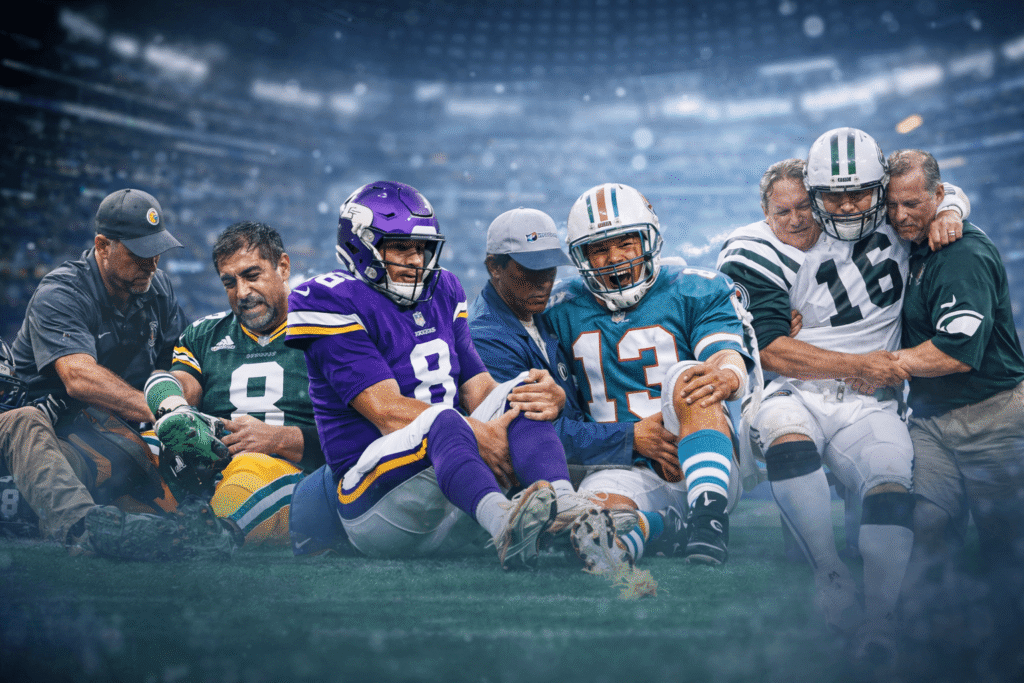
Achilles tendon injuries are among the most severe and career-threatening injuries in sports, particularly for NFL quarterbacks. The history of Achilles tears among quarterbacks is a tale of adversity, resilience, and medical advancements. This blog delves into the notable instances of Achilles injuries in NFL quarterbacks, the impact on their careers, and how modern medicine has improved recovery prospects. Early Instances and Career Impact The Achilles tendon, connecting the calf muscles to the heel bone, is crucial for walking, running, and jumping. An Achilles tear can be devastating for any athlete, especially a quarterback who relies heavily on mobility and stability. In the early days of the NFL, an Achilles tear often meant the end of a player’s career due to the limited medical technology and rehabilitation methods available. One of the earliest high-profile cases was that of Dan Marino, the legendary Miami Dolphins quarterback. In 1993, Marino suffered a complete tear of his Achilles tendon, a significant injury that raised doubts about his future in the league. However, Marino’s determination and the medical care he received allowed him to return to the field the following season. While he never fully regained his pre-injury mobility, Marino continued to perform at a high level, proving that recovery was possible even in the early 90s. The Evolution of Medical Treatment The treatment and rehabilitation of Achilles tendon injuries have seen significant advancements over the decades. In the 1990s, surgery was the primary option, often followed by a long and grueling rehabilitation process. Despite the advancements, the recovery was uncertain, and many players were unable to return to their pre-injury form. The turn of the century brought new techniques and better outcomes. The use of minimally invasive surgical methods, improved rehabilitation protocols, and advanced physiotherapy techniques have dramatically enhanced recovery prospects. This evolution is evident in the cases of several quarterbacks who have suffered Achilles injuries in the past two decades. Notable Cases in the Modern Era Dan Marino Achilles Injury (1993) Dan Marino, one of the most iconic quarterbacks in NFL history, faced a career-threatening Achilles injury in October, 1993, while playing for the Miami Dolphins. Marino tore his right Achilles tendon, an injury that required immediate surgical intervention. At the time, medical advancements were not as developed, making his return to the field uncertain. Marino missed the remainder of the season but defied expectations by returning the following year. Although he never fully regained his pre-injury mobility, Marino adapted his game and continued to perform at an elite level, demonstrating remarkable resilience and the importance of effective rehabilitation. Vinny Testaverde (1999) Vinny Testaverde, then a quarterback for the New York Jets, ruptured his Achilles tendon in the first game of the 1999 season. At 35, many thought his career was over. However, Testaverde made a remarkable recovery and returned to play in the NFL for several more seasons, demonstrating the improved surgical techniques and rehabilitation protocols of the late 1990s and early 2000s. Kirk Cousins Achilles Injury ( 2023) Kirk Cousins, the esteemed quarterback for the Minnesota Vikings, faced a devastating setback in October, 2023, when he tore his right Achilles tendon during Week 8 against the Green Bay Packers. This injury, classified as a Grade 3 Achilles tear, sidelined Cousins for the remainder of the 2023 NFL season. The severity of a Grade 3 tear involves a complete rupture of the tendon, necessitating surgical intervention followed by an extensive rehabilitation process. Cousins’ injury underscored the unpredictable and harsh realities of professional football, where even the most seasoned athletes can face career-threatening situations. His recovery journey will be closely watched as he navigates the challenging path back to the field. Aaron Rodgers (2023) One of the most recent and high-profile Achilles injuries occurred to Aaron Rodgers, the veteran quarterback for the New York Jets, in 2023. In a shocking turn of events, Rodgers tore his Achilles tendon just minutes into his debut game with the Jets. At 39 years old, this injury was particularly concerning given his age and the typical recovery timeline for Achilles injuries. Rodgers underwent surgery and immediately started a rigorous rehabilitation process. His recovery is being closely monitored, and there is cautious optimism about his return. Rodgers’ case highlights both the advances in medical treatment and the uncertainties that still exist with such severe injuries. Medical Advancements and Future Prospects The treatment of Achilles injuries has progressed significantly, with new surgical techniques, biologics, and rehabilitation protocols leading the way. Techniques such as platelet-rich plasma (PRP) injections and stem cell therapy are becoming more common, aiming to enhance healing and reduce recovery time. Additionally, the focus on personalized rehabilitation programs tailored to each athlete’s needs has improved outcomes. Modern physiotherapy incorporates advanced technologies like anti-gravity treadmills and aquatic therapy, allowing athletes to regain strength and mobility more effectively. The Psychological Aspect Recovery from an Achilles tear is not solely a physical challenge; the psychological aspect is equally crucial. Quarterbacks often face significant mental hurdles, including fear of re-injury and loss of confidence. Modern rehabilitation programs increasingly incorporate psychological support, helping athletes navigate the mental challenges of recovery. The history of Achilles tears in NFL quarterbacks is a journey through medical advancements and the indomitable spirit of athletes. From the early days when such an injury could end a career, to the modern era where recovery is not only possible but increasingly successful, the evolution is remarkable. Advancements in surgical techniques, rehabilitation protocols, and preventive care have transformed the landscape. NFL quarterbacks like Dan Marino, Vinny Testaverde, Jake Delhomme, Robert Griffin III, and others have shown that with the right treatment and support, returning to the field is achievable. As medical science continues to advance, the prospects for recovering from Achilles injuries will only improve, offering hope and opportunities for future generations of quarterbacks facing this challenging injury. The integration of physical and psychological rehabilitation will be key in ensuring that athletes not only recover but thrive post-injury, continuing to inspire fans and aspiring players alike.
Top 8 Common Injuries for Quarterbacks: Prevention & Treatment
Quarterbacks play a critical role in football, often facing intense physical challenges that can lead to a variety of injuries. Here are the eight most common injuries that quarterbacks encounter, along with preventive measures and treatments. 1. Concussions Concussions are traumatic brain injuries caused by a blow to the head or body, leading to the brain moving rapidly inside the skull. Symptoms: Headaches Dizziness Nausea Confusion Memory loss Prevention and Treatment: Use of proper helmet fitting and techniques Immediate medical evaluation Rest and gradual return to play under medical supervision Example: An example is the concussion sustained by Tua Tagovailoa, the Miami Dolphins quarterback, which led to significant time away from the game to ensure full recovery. Shoulder Injuries Shoulder injuries, including rotator cuff tears and labrum tears, are common due to repetitive throwing motions and physical contact. Symptoms: Pain and swelling Limited range of motion Weakness in the shoulder Prevention and Treatment: Strengthening exercises for shoulder muscles Proper throwing mechanics Physical therapy and, in severe cases, surgery Example: Green Bay Packers quarterback Aaron Rodgers has faced multiple shoulder injuries throughout his career, emphasizing the importance of proper rehabilitation. Knee Injuries Knee injuries, such as ACL tears, MCL sprains, and meniscus tears, occur due to sudden changes in direction, tackles, and collisions. Symptoms: Swelling and pain Instability Difficulty bearing weight Prevention and Treatment: Use of knee braces during practice and games Strengthening exercises for knee stability Surgical repair and extensive rehabilitation Example: Tom Brady’s ACL tear in 2008 highlighted the potential severity of knee injuries for quarterbacks and the importance of effective recovery programs. 4. Ankle Sprains Ankle sprains result from the ligaments around the ankle being stretched or torn, often due to awkward landings or being tackled. Symptoms: Swelling and bruising Pain and tenderness Reduced mobility Prevention and Treatment:es Ankle strengthening and flexibility exercises Proper footwear and taping Rest, ice, compression, and elevation (RICE), along with physical therapy Example: Patrick Mahomes has dealt with ankle sprains that have impacted his play, underscoring the need for comprehensive ankle care. 5. Rib Injuries Rib injuries, including fractures and cartilage damage, occur from direct hits to the torso, common in high-impact collisions. Symptoms: Sharp pain in the rib area Difficulty breathing deeply Swelling and bruising Prevention and Treatment: Protective rib padding Avoiding direct hits through quick release of the ball Rest and pain management Example: Drew Brees suffered multiple rib fractures during his career, highlighting the need for effective protection and recovery strategies. 6. Elbow Injuries Elbow injuries, such as tendonitis and ligament tears, can result from repetitive throwing motions and overuse. Symptoms: Pain and tenderness around the elbow Swelling and reduced range of motion Weakness in the arm Prevention and Treatment: Proper warm-up and stretching routines Strengthening exercises for the arm muscles Rest, physical therapy, and in severe cases, surgery Example: Ben Roethlisberger’s elbow injury required surgery and extensive rehabilitation, demonstrating the serious nature of such injuries. 7. Hand and Finger Injuries Hand and finger injuries, including fractures and dislocations, are common due to the need to handle the ball and contact with helmets and ground. Symptoms: Pain and swelling Bruising and deformity Difficulty gripping or moving fingers Prevention and Treatment: Protective gloves Proper hand positioning and catching techniques Splinting, rest, and physical therapy Example: Russell Wilson has experienced finger dislocations, emphasizing the need for effective treatment and protective measures. 8. Hamstring Strains Hamstring strains occur when the muscles or tendons in the back of the thigh are overstretched or torn, often during sprinting or sudden movements. Symptoms: Sharp pain in the back of the thigh Swelling and bruising Difficulty walking or running Prevention and Treatment: Proper warm-up and stretching exercises Strengthening exercises for the hamstring muscles Rest, ice, compression, and elevation (RICE), along with physical therapy Example: Kyler Murray has dealt with hamstring strains, showing the importance of conditioning and careful management of such injuries. Quarterbacks face numerous physical challenges that make them prone to various injuries. By understanding these common injuries, their symptoms, and the best preventive and treatment strategies, players can better protect themselves and maintain their performance on the field. Proper training, conditioning, and medical care are essential for quarterbacks to minimize the risk of injury and ensure a long, successful career in football.
10 Worst Injuries for Running Backs: Career-Threatening Risks
Running backs are often considered the workhorses of a football team, bearing the brunt of physical contact as they navigate through defenses. This demanding role subjects them to a high risk of injuries. Here, we explore some of the worst injuries running backs can suffer, their impact on careers, and recovery prospects. 1. ACL Tears Anatomy and Function The anterior cruciate ligament (ACL) is one of the key ligaments that stabilize the knee joint. It connects the thigh bone (femur) to the shin bone (tibia) and is crucial for movements involving sudden stops, starts, and changes in direction. Mechanism of Injury ACL tears commonly occur when a running back makes a rapid change in direction, stops suddenly, or lands awkwardly from a jump. The intense physical contact in football also increases the risk. Impact on Career An ACL tear is one of the most dreaded injuries for running backs. It typically requires surgical repair and a lengthy rehabilitation process, often sidelining players for nine to twelve months. While advancements in medical technology have improved recovery outcomes, the injury can still significantly affect a player’s performance and career longevity. Examples from 2022-2023: Breece Hall, Javonte Williams, Nick Chubb, Keaton Mitchell, Gus Edwards 2. Achilles Tendon Ruptures Anatomy and Function The Achilles tendon connects the calf muscles to the heel bone, facilitating walking, running, and jumping. Mechanism of Injury Ruptures often occur during activities that involve sudden acceleration or deceleration. For running backs, this can happen during explosive sprints or abrupt stops. Impact on Career Achilles tendon ruptures are severe and can be career-threatening. The recovery process is extensive, often requiring surgery followed by a year of rehabilitation. Even with successful recovery, players might not regain their pre-injury level of explosiveness and agility, which are critical for running backs. Examples from 2022-2023: Cam Akers, J.K. Dobbins, Marlon Mack 3. Meniscus Tears Anatomy and Function The menisci are two crescent-shaped cartilage discs that cushion and stabilize the knee joint, allowing for smooth movement and weight distribution. Mechanism of Injury Meniscus tears can occur due to twisting motions, direct impacts, or degenerative changes. Running backs are susceptible due to the high-impact nature of their position. Impact on Career Meniscus tears vary in severity. Minor tears might heal with conservative treatment, but severe tears often require surgery. Recovery can range from a few weeks to several months. Chronic meniscus issues can lead to long-term knee problems, affecting a running back’s performance and durability. Examples from 2022-2023: De’ Von Achane, Evan Hull, James Conner, Keaton Mitchell 4. High-Ankle Sprains Anatomy and Function A high-ankle sprain involves the ligaments that connect the tibia and fibula above the ankle joint. These ligaments stabilize the lower leg and ankle during movement. Mechanism of Injury High-ankle sprains typically occur when the foot is twisted outward, often during tackles or sudden direction changes. Impact on Career High-ankle sprains are particularly troublesome for running backs. They can be more painful and take longer to heal than regular ankle sprains. Recovery time ranges from several weeks to a few months, sometimes requiring surgery, and lingering instability or pain can hamper a player’s agility and speed. Examples from 2022-2023: Saquon Barkley, Jonathan Taylor, Alvin Kamara, Kyren Williams, Rhamondre Stevenson, David Montgomery, Jerome Ford, Khalil Herbert, Tony Pollard, Dameon Pierce 5. Concussions Anatomy and Function A concussion is a type of traumatic brain injury caused by a blow to the head or body that causes the brain to move rapidly within the skull. Mechanism of Injury Running backs are at high risk for concussions due to frequent collisions with defenders. Helmet-to-helmet hits and violent tackles are common causes. Impact on Career Concussions are increasingly recognized for their long-term impact on players’ health. Symptoms can include headaches, dizziness, memory issues, and cognitive impairments. Multiple concussions can lead to chronic traumatic encephalopathy (CTE), a degenerative brain disease. Managing concussions often involves strict protocols and can lead to extended absences from play. The long-term health risks make concussions a particularly serious concern. Examples from 2022-2023: Isaiah Pacheco, Joe Mixon, Gus Edwards 6. Shoulder Dislocations Anatomy and Function The shoulder joint is a ball-and-socket joint that allows for a wide range of motion but is prone to instability and dislocations. Mechanism of Injury Running backs can suffer shoulder dislocations from direct impacts, falls, or awkward tackles that force the arm into an unnatural position. Impact on Career A dislocated shoulder can cause significant pain and require immobilization. Repeated dislocations may necessitate surgical intervention to stabilize the joint. Recovery can take several months, and the risk of re-injury is high. Shoulder stability is crucial for ball security and absorbing tackles, making this injury particularly detrimental. Examples from 2022-2023: Isaiah Pacheco, Dalvin Cook 7. Hamstring Strains Anatomy and Function The hamstrings are a group of muscles at the back of the thigh responsible for bending the knee and extending the hip. Mechanism of Injury Hamstring strains occur due to overstretching or overloading the muscles, often during high-speed running or sudden acceleration. Impact on Career Hamstring strains vary in severity. Mild strains might heal in a few weeks, while severe strains can take months. Recurrence is common, and chronic hamstring issues can severely limit a running back’s speed and explosive power, essential attributes for the position. Examples from 2022-2023: Aaron Jones, Chuba Hubbard, Gus Edwards, Jerome Ford, Isaiah Pacheco, Kendre Miller, Brian Robinson Jr., Jaylen Warren, Jahymr Gibbs, Breece Hall 8. Turf Toe Anatomy and Function Turf toe is a sprain of the ligaments around the big toe joint, commonly caused by hyperextension. Mechanism of Injury Running backs often get turf toe when pushing off forcefully from a planted foot, especially on artificial turf surfaces. Impact on Career Turf toe can be deceptively debilitating. It causes significant pain and limits the ability to push off and change direction, critical movements for running backs. Recovery time can vary, with severe cases requiring several months and potentially leading to chronic issues. Examples from 2022-2023: Derrick Henry, Jonathan Taylor, Antonio Gibson, Gus Edwards 9.
Understanding the 7 Most Common Injuries for Wide Receivers
Wide receivers (WRs) play a crucial role in football, responsible for catching passes from the quarterback, gaining yardage, and scoring touchdowns. Due to the nature of their position, which involves high-speed sprints, abrupt changes in direction, and physical collisions, wide receivers are particularly prone to certain types of injuries. In this blog, we will explore the most common injuries faced by wide receivers, their causes, and preventive measures. 1. Hamstring Strains Hamstring strains are among the most frequent injuries sustained by wide receivers. These injuries occur when the muscles at the back of the thigh are overstretched or torn, often due to rapid acceleration or deceleration. The explosive sprints and sudden stops that WRs perform make them particularly susceptible to this injury. Symptoms and Treatment: Symptoms of a hamstring strain include sharp pain in the back of the thigh, swelling, and difficulty walking or running. Treatment typically involves rest, ice, compression, and elevation (RICE). Physical therapy may be necessary to strengthen the muscles and prevent future strains. Prevention: To prevent hamstring strains, WRs should incorporate regular stretching and strengthening exercises for their hamstrings and surrounding muscles. Warm-ups and cool-downs before and after practice sessions are also crucial. 2. Ankle Sprains Ankle sprains are another common injury for wide receivers. These occur when the ligaments in the ankle are stretched or torn, often due to sudden changes in direction, jumping, or landing awkwardly. Ankle sprains can vary in severity from mild to severe, affecting a player’s mobility and performance. Symptoms and Treatment: Symptoms include pain, swelling, bruising, and difficulty bearing weight on the affected ankle. Treatment involves the RICE protocol, and severe cases may require a brace or even surgery. Rehabilitation exercises are essential to restore strength and flexibility. Prevention: To prevent ankle sprains, WRs should wear supportive footwear and consider using ankle braces during games and practice. Balance and proprioception exercises can also help strengthen the ankle and improve stability. 3. ACL Tears Tears of the anterior cruciate ligament (ACL) are severe injuries that can sideline a wide receiver for an extended period. The ACL is a cruciate ligament in the knee that stabilizes the joint. ACL tears often occur during sudden changes in direction, pivoting, or awkward landings. Symptoms and Treatment: Symptoms include a loud popping sound at the time of injury, severe pain, swelling, and instability in the knee. Treatment usually involves surgical reconstruction of the ACL followed by an extensive rehabilitation program. Prevention: Preventing ACL tears involves strengthening the muscles around the knee, particularly the quadriceps and hamstrings. Plyometric exercises and agility drills can also help improve coordination and reduce the risk of injury. 4. Shoulder Dislocations Shoulder dislocations occur when the upper arm bone is forced out of the shoulder socket. This injury is common among wide receivers due to the physical nature of the sport, especially when reaching for a pass or absorbing a tackle. Symptoms and Treatment: Symptoms include intense pain, visible deformity, and inability to move the shoulder. Treatment often involves reducing the dislocation (putting the bone back in place) followed by immobilization in a sling. Physical therapy is necessary to restore full function. Prevention: Strengthening the shoulder muscles and maintaining good flexibility can help prevent dislocations. WRs should also use proper techniques when catching passes and absorbing tackles to minimize the risk of this injury. 5. Concussions Concussions are a serious concern in football, including for wide receivers. A concussion is a traumatic brain injury caused by a blow to the head or body, leading to a range of symptoms that can affect cognitive function and physical health. Symptoms and Treatment: Symptoms include headache, dizziness, confusion, nausea, and sensitivity to light or noise. Treatment involves rest and gradual return to activity under medical supervision. Severe cases may require extended recovery periods. Prevention: To prevent concussions, WRs should always wear properly fitted helmets and follow safe tackling and blocking techniques. Awareness and education about the signs and symptoms of concussions are also crucial for early detection and management. 6. Turf Toe Turf toe is a sprain of the ligaments around the big toe joint, often caused by repetitive hyperextension of the toe during push-offs or sudden stops. This injury is common among wide receivers due to the demands of sprinting and cutting on artificial turf surfaces. Symptoms and Treatment: Symptoms include pain, swelling, and limited movement in the big toe. Treatment involves rest, ice, compression, and elevation, along with the use of stiff-soled shoes or orthotics to limit toe movement. Severe cases may require immobilization or surgery. Prevention: To prevent turf toe, WRs should wear appropriate footwear that provides adequate support and cushioning. Strengthening exercises for the foot and toe muscles can also help reduce the risk of injury. 7. Rib Fractures Rib fractures occur when one or more ribs are cracked or broken, often due to direct impact or collision during a game. Wide receivers are at risk for this injury due to tackles and hits from defenders. Symptoms and Treatment: Symptoms include sharp pain in the chest, especially with deep breaths, coughing, or movement. Treatment typically involves rest and pain management, as ribs generally heal on their own over time. Severe cases may require medical intervention. Prevention: Wearing rib protectors and padding during games can help reduce the risk of rib fractures. WRs should also work on strengthening their core muscles to provide better support and protection for the ribs. Wide receivers face a variety of common injuries due to the physical and dynamic nature of their position. Understanding these injuries, their symptoms, and preventive measures is crucial for maintaining the health and performance of wide receivers. Proper training, conditioning, and safety practices can significantly reduce the risk of these injuries, allowing WRs to stay on the field and excel in their roles. By prioritizing injury prevention and effective treatment, wide receivers can ensure a long and successful career in football.
Current NFL Player Injury Updates: Insights and Implications
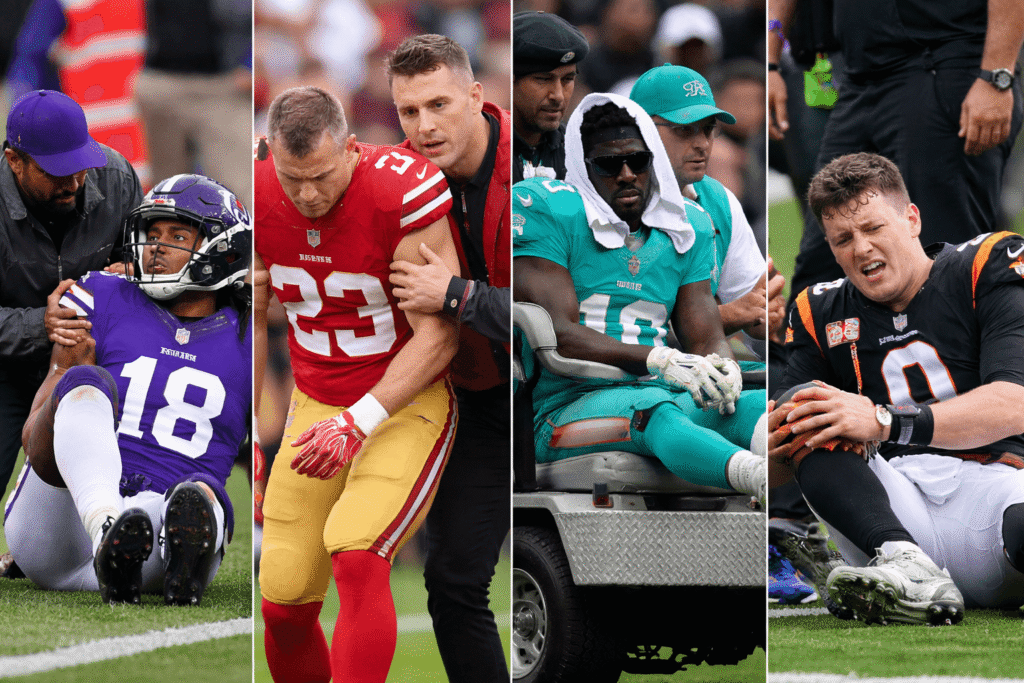
In the world of professional football, player injuries are an unfortunate yet inevitable part of the game. Understanding the nature and severity of these injuries can offer insights into the recovery timelines and potential impacts on player performance. This article provides a comprehensive update on recent injuries sustained by current NFL players, offering a detailed look at each case. Name Date Injury Details Concern George Kittle 12/3/2023 Core Played through core muscle injury that required offseason surgery. Mild Greg Dulcich 1/8/24 Foot Dulcich has been dealing with swelling to his foot Moderate Tank Dell 4/27/2024 Leg Dell was involved in a shooting, he suffered a minor wound injury, likely flesh Mild Rome Odunze 5/13/24 Hamstring Hamstring tightness at rookie OTAs. Mild BIjan Robinson 5/20/2024 Ankle Ankle sprain, no details Mild Kyren Williams 5/21/2024 Foot Foot issue, no details Moderate Josh Jacobs 5/21/2024 Hamstring Recently suffered hamstring but was participating in OTAs Mild Tucker Kraft 5/21/2024 Pec Recently suffered pec tendon injury, likely grade 1 vs. 2 Moderate Xavier Worthy 5/22/2024 Hamstring Hamstring injury, unknown severity Mild Michael Pittman Jr. 5/22/2024 Knee Banged knees during OTAs, likely bone bruise Mild Luke Schoonmaker 5/22/2024 Hamstring Foot Shoulder Recently suffered hamstring but was participating in OTAs Injury prior to 2023 season Underwent shoulder surgery earlier in offseason Moderate Malaci Corley 5/29/24 Ankle Limping around but sounds like it is nothing to be concerned about Mild Breece Hall 5/29/24 Undisclosed Working in the rehab area during OTAs. Mild Audric Estime 5/30/24 Knee Reportedly underwent a ‘small’ menisectomy to likely address a small meniscal tear. Moderate George Kittle – Core Muscle Injury (December 3, 2023) George Kittle, the dynamic tight end for the San Francisco 49ers, played through a core muscle injury with roughly about 10 weeks to go in the 2023 season. Despite the discomfort, Kittle’s performance remained commendable, underscoring his resilience and dedication. The injury required offseason surgery, indicating that while significant enough to warrant surgical intervention, it is not expected to have long-term repercussions. Top 5-8 potential continues to remain a strong possibility for Kittle heading into 2024. Greg Dulcich – Foot Swelling (January 8, 2024) Greg Dulcich, the promising tight end for the Denver Broncos, has been dealing with foot swelling since early January 2024. This moderate injury has raised concerns about his ability to participate fully in training and preseason activities. Foot injuries can be particularly troublesome for football players due to the constant pressure and movement required in their positions. This is on top of the recurrent hamstring injuries that have plagued his NFL career so far. Dulcich has a ton of potential but needs to stay healthy in order to show what he can do on the field. Tank Dell – Leg Injury (April 27, 2024) Tank Dell, the wide receiver for the Houston Texans, was involved in a shooting incident, suffering a minor wound injury to his leg. Classified as mild, this flesh wound, while alarming, is not expected to impede his participation in the upcoming season. Mind you this was after his recovery from his season-ending ankle injury. Dell’s swift recovery will be crucial for the Texans, who are counting on his speed and agility on the field combining with Nico Collins and Stefon Diggs to serve as one of the best wide receiver groups in the NFL. Rome Odunze – Hamstring Tightness (May 13, 2024) During rookie OTAs, Rome Odunze experienced hamstring tightness. This mild injury is not uncommon in the early stages of intensive training. Proper rest and physiotherapy are essential to ensure that this tightness does not develop into a more severe strain. Odunze was able to return to the field a couple days ago which tells me this was likely a mild hamstring strain but it is definitely something worth monitoring and could bother him again in the future. Bijan Robinson – Ankle Sprain (May 20, 2024) Bijan Robinson, a potential top 3 fantasy running back, suffered an ankle sprain in May 2024. Classified as mild, the injury is not expected to sideline him for an extended period. Ankle sprains, if managed correctly with rest, ice, compression, and elevation (RICE), typically heal well. Robinson’s quick return to form will be crucial for maintaining his explosive playing style. Kyren Williams – Foot Issue (May 21, 2024) Kyren Williams, a talented running back with a history of soft tissue injuries, is dealing with a new foot issue that I deem to be moderate. The specifics of the injury have not been disclosed, but the classification suggests it requires careful management to prevent escalation. Foot injuries can severely impact a running back’s performance, making it essential for Williams to get this properly addressed so he is ready for the 2024 preseason. Josh Jacobs – Hamstring Injury (May 21, 2024) Josh Jacobs, the former Las Vegas Raiders and now Green Bay Packers’ running back, recently sustained a mild hamstring injury but has been participating in OTAs. Hamstring injuries can be tricky due to their tendency to recur if not fully healed. I fully expect him to be fine by the time preseason arises but it’s noteworthy. There’s a good chance he is in a RBBC this year in Green Bay. Tucker Kraft – Pectoral Tendon Injury (May 21, 2024) Tucker Kraft, the Green Bay tight end, suffered a pectoral tendon injury, likely between grade 1 and 2, classifying it as moderate. Pectoral injuries can limit a player’s ability to block and catch, essential skills for a tight end. Kraft’s recovery will involve targeted strength training and physiotherapy to ensure a complete recovery without compromising his functional performance. Xavier Worthy – Hamstring Injury (May 22, 2024) Xavier Worthy, a wide receiver for the Kansas City Chiefs, is dealing with a hamstring injury of unknown severity. Given the pivotal role of speed and agility in his game, hamstring health is critical. Don’t freak out about this yet but this is definitely an injury to make note of. Michael Pittman Jr. – Knee Injury (May 22, 2024)
Key Players on Short-Term IR: 2023 NFL Season
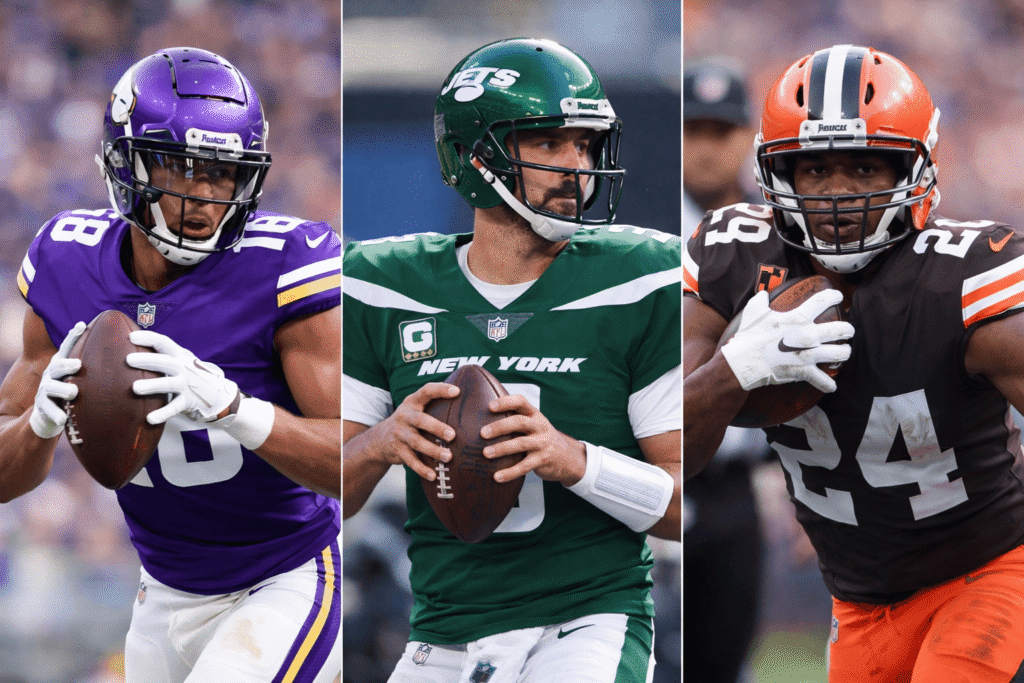
Table of Contents The 2023 NFL season has been a roller coaster, marked by intense competition, stunning plays, and unfortunately, numerous injuries. Several key players were sidelined, placed on Short-Term Injured Reserve (IR) as they recovered. These injuries not only affected the players’ careers but also had significant impacts on their respective teams. Here’s a detailed look at each of these players, the injuries they faced, and the games they missed. Quarter Back Name Team Injury Details Game Missed Kyler Murray ARI Post-ACL Returning from ACL. 9 Kyler Murray, ARI Kyler Murray, the dynamic quarterback for the Arizona Cardinals, spent the beginning of the 2023 season on Short-Term IR as he continued his recovery from an ACL injury. The recovery process was lengthy, causing him to miss nine games. Murray’s absence was keenly felt by the Cardinals, as they struggled to find consistency on offense without their star QB. His return was highly anticipated, not just for his playmaking abilities but also for the leadership he brings to the field. Running back Name Team Injury Details Game Missed Jonathan Taylor IND Ankle/ Contract Ankle vs. Contract issues. 3 Kyren Williams LAR Ankle Likely high-ankle sprain 4 James Conner ARI Knee Knee, no details. 4.5 Jamaal Williams NO Hamstring Knee, no details. 4 Damien Harris BUF Neck, Concussion Concussion, Cervical injury 11 Jeff Wilson Jr. MIA Unknown Midsection, Finger 6 Keaton Mitchell BAL Shoulder No details. Shoulder dislocation vs. Grade 2-3 AC sprain 6 Jonathan Taylor, IND Jonathan Taylor, the Indianapolis Colts’ star running back, found himself on Short-Term IR due to a combination of an ankle injury and contract disputes. This dual issue caused him to miss three games early in the season. The Colts’ running game faltered without Taylor, highlighting his importance to their offensive scheme. His absence underscored the precarious balance between player health and contract negotiations in professional sports. Kyren Williams, LAR Kyren Williams, a promising running back for the Los Angeles Rams, suffered a high-ankle sprain that sidelined him for four games. This injury was particularly frustrating for the Rams, as Williams had shown significant potential early in the season. High-ankle sprains are notoriously slow to heal, and Williams’ recovery was closely monitored. The Rams missed his versatility and explosive running during his time on IR, and when he returned he picked up exactly where he left off. James Conner, ARI James Conner, the Arizona Cardinals’ reliable running back, was placed on Short-Term IR with a knee injury. An absence of 4+ games is pretty regular for him. Although specific details about the injury were scarce, Conner missed four and a half games. His physical running style and ability to find the end zone were sorely missed by the Cardinals’ offense. Conner’s absence highlighted the depth issues in Arizona’s backfield and the importance of his veteran presence. Jamaal Williams, NO Jamaal Williams, more of a depth piece rather than a key running back for the New Orleans Saints, was sidelined with a grade 2 hamstring injury. Hamstring injuries can be particularly tricky, requiring careful management to avoid re-injury. Williams missed four games, a period during which the Saints had to rely on their backup running backs. Damien Harris, BUF Damien Harris, running back for the Buffalo Bills, experienced a severe neck and concussion injury that led to him being placed on Short-Term IR. Harris missed eleven games, making it one of the more extended absences on this list. His injury raised concerns about player safety and the long-term effects of concussions in the NFL. The Bills missed his physicality and veteran experience in their backfield, and Harris has since announced his retirement from the NFL. Jeff Wilson Jr., MIA Jeff Wilson Jr., a versatile running back for the Miami Dolphins, faced a mysterious midsection and finger injury that saw him miss a total of six games. The lack of detailed information about his injury left fans and analysts speculating about his condition. Wilson’s absence impacted the Dolphins’ offensive rhythm, as his dual-threat capability as a runner and receiver out of the backfield was hard to replace. Keaton Mitchell, BAL Keaton Mitchell, running back for the Baltimore Ravens, dealt with a shoulder injury that sidelined him for six games. While details were sparse, it was speculated that he might have suffered a shoulder dislocation or a severe AC sprain. Mitchell’s injury deprived the Ravens of a promising young talent, forcing them to adjust their offensive plans and rely more heavily on their depth at running back. Eventually Mitchell tore his ACL, causing him to miss the rest of the season. Wide Reciever Name Team Injury Details Game Missed Cooper Kupp LAR Hamstring Hamstring reinjury 8/31. 4 Justin Jefferson MIN Hamstring Hamstring, likely grade 2 8 Diontae Johnson PIT Hamstring Likely a grade 2 strain. 4 Tyquan Thornton NE Shoulder No details. Shoulder dislocation vs. Grade 2-3 AC sprain 5 Cooper Kupp, LAR Cooper Kupp, the standout wide receiver for the Los Angeles Rams, suffered a hamstring injury in early preseason, then a reinjury just before the season started, which led to him missing four games. Kupp’s absence was a significant blow to the Rams’ passing attack, as he is one of the most productive receivers in the league, leading to the emergence of Puka Nacua. Justin Jefferson, MIN Justin Jefferson, the Minnesota Vikings’ star wide receiver, was sidelined with a grade 2 hamstring injury that kept him out for eight games during the middle of the season. Jefferson’s injury was a major setback for the Vikings’ offense, as he is one of the league’s premier playmakers. His absence tested the depth of the Vikings’ receiving corps and underscored the importance of maintaining player health through the grueling NFL season. Diontae Johnson, PIT Diontae Johnson, wide receiver for the Pittsburgh Steelers, suffered a hamstring strain, causing him to miss four games. Johnson’s quickness, reliable hands, and route-running skills were missed by the Steelers, who struggled to find consistency in their passing game without him. His injury was
Players Who Suffered Season-Ending Injuries in 2023 (Season-Ending Injured Reserve (IR))
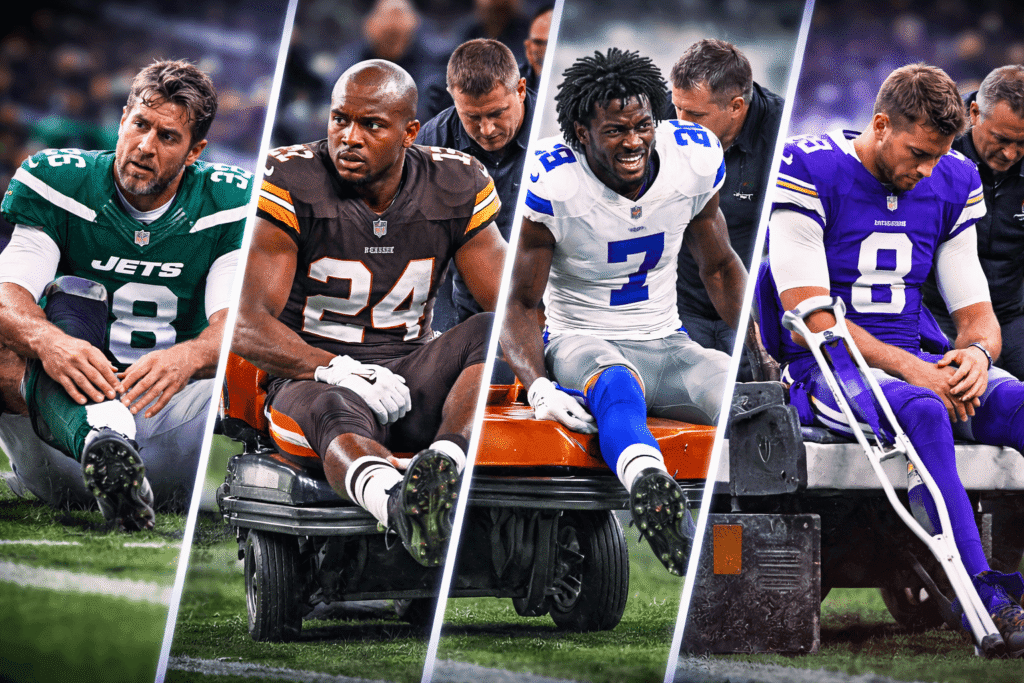
Table of Contents The 2023 NFL season has been marked by numerous significant injuries, sidelining several key players and impacting their respective teams’ performances. This article provides a comprehensive look at players who were placed on Season-Ending Injured Reserve (IR) due to various injuries, detailing the nature of their injuries and the implications for their teams. Quarterbacks QB Name Team Injury Details Aaron Rodgers NYJ Achilles Left Achilles tear. ‘Speed bridge’ surgical technique Kirk Cousins MIN Achilles Right Achilles tear. Anthony Richardson IND Shoulder Right AC sprain Type III. Season-ending surgery. Aaron Rodgers (NYJ) – Achilles Aaron Rodgers, the star quarterback for the New York Jets, suffered a devastating left Achilles tear early in the season. The injury occurred during Rodgers first game as a Jet, leading to the implementation of a ‘speed bridge’ surgical technique to expedite recovery. This technique aims to enhance the healing process, but Rodgers’ season was over, leaving the Jets to have to deal with Zach Wilson who struggled as a viable replacement. Kirk Cousins (MIN) – Achilles Minnesota Vikings’ quarterback, Kirk Cousins, faced a similar fate as Aaron Rodgers, suffering a right Achilles tear. Cousins’ injury was a severe blow to the Vikings, who were relying heavily on his experience and leadership. Cousins was an ironman before this injury, having played 8 straight seasons playing at least 15 games. He was signed by the Atlanta Falcons in the offseason and now has an even more loaded offense than he had in Minnesota. Anthony Richardson (IND) – Shoulder Rookie sensation Anthony Richardson of the Indianapolis Colts had a promising start to his NFL career cut short by a right AC sprain Type III. This shoulder injury necessitated season-ending surgery. Richardson’s dynamic playing style and potential were sorely missed by the Colts, who had high hopes for their young quarterback. There’s a good chance he picks up exactly where he left off in 2024. Running Backs RB Name Team Injury Details Nick Chubb CLE Knee (ACL) Left MCL + partial ACL + meniscus. Nyheim Hines BUF Knee (ACL) Torn ACL (while on jetski) J.K. Dobbins BAL Achilles Season-ending Achilles tear. Marlon Mack ARI Achilles Season-ending Achilles tear. Evan Hull IND Knee Knee injury. Meniscal tear, requiring repair. Jonathan Williams WSH Unknown No details Nick Chubb (CLE) – Knee (ACL) Nick Chubb, the powerhouse running back for the Cleveland Browns, suffered one of the most gruesome injuries you will ever see. A catastrophic left knee injury, involving the MCL, partial ACL, and meniscus. Chubb’s injury was one of the most devastating from a fantasy-perspective of the entire season. It remains to be seen if he will be able to make his debut early in the season, or if it will be delayed. The other question is will Chubb look like his pre-injury self? More info to come as the offseason comes to a close. Nyheim Hines (BUF) – Knee (ACL) In an unusual accident, Buffalo Bills’ running back Nyheim Hines tore his ACL while on a jetski. The non-football injury was unexpected and sidelined Hines for the season, impacting the Bills’ depth at the running back position and their special teams unit where Hines was a key contributor. J.K. Dobbins (BAL) – Achilles J.K. Dobbins of the Baltimore Ravens suffered a season-ending Achilles tear, a year after . Dobbins was returning from an ACL tear. Achilles tears are dreadful injuries for running backs, and the majority of RBs who have suffered them have struggled to be effective again, including James Robinson and Cam Akers. Now he tries his luck with the Chargers continuing to serve with Gus Edwards. Marlon Mack (ARI) – Achilles Arizona Cardinals’ running back Marlon Mack also ended his season with an Achilles tear. Mack hasn’t been fantasy-relevant since 2019, as he has struggled with injuries in each of the past 4 years. Evan Hull (IND) – Knee Indianapolis Colts’ rookie running back Evan Hull sustained a knee injury involving a meniscal tear that required surgical repair. Hull’s promising start was abruptly halted, leaving the Colts’ running back depth in disarray and placing additional pressure on their offensive unit. Wide Receivers WR Name Team Injury Details Mike Williams LAC Knee (ACL) Torn L ACL. Possible MCL, meniscus Kendrick Bourne NA Knee (ACL) Torn right ACL. Ashton Dulin IND Knee (ACL) Torn ACL. Tim Patrick DEN Achilles Season-ending Achilles tear. Russell Gage TB Knee Non-contact knee injury. ACL? Mike Williams (LAC) – Knee (ACL) Mike Williams, a key wide receiver for the Los Angeles Chargers, tore his left ACL, with possible involvement of the MCL and meniscus. Williams’ injury was a significant blow to the Chargers’ passing attack, as he was one of their primary deep threats and a consistent performer. Kendrick Bourne (NE) – Knee (ACL) New England Patriots’ wide receiver Kendrick Bourne suffered a torn right ACL. Bourne, known for his versatility and reliability, left a noticeable void in the Patriots’ receiving corps. His injury forced the Patriots to adjust their offensive schemes and rely on less experienced receivers, which they struggled to do so. Ashton Dulin (IND) – Knee (ACL) Ashton Dulin of the Indianapolis Colts also fell victim to an ACL tear. Dulin’s role as a receiver and special teams contributor was crucial, and his absence disrupted the Colts’ offensive and special teams strategies. Tim Patrick (DEN) – Achilles Denver Broncos’ wide receiver Tim Patrick endured a season-ending Achilles tear. Patrick’s injury was particularly disheartening as he had previously missed the entire 2022 season with an ACL tear. His back-to-back season-ending injuries have cast a shadow over his career prospects. Returning to becoming fantasy-relevant is unlikely but let’s hope for the best. Russell Gage (TB) – Knee Tampa Bay Buccaneers’ wide receiver Russell Gage suffered a non-contact knee injury, suspected to be an ACL tear. Gage’s injury was a significant setback for the Buccaneers’ offense, which relied on his speed and route-running ability to stretch the field. Injury Trends and Impact The 2023 season has been marked by a high
