
The Evolution of NFL Draft Strategies: Then vs. Now
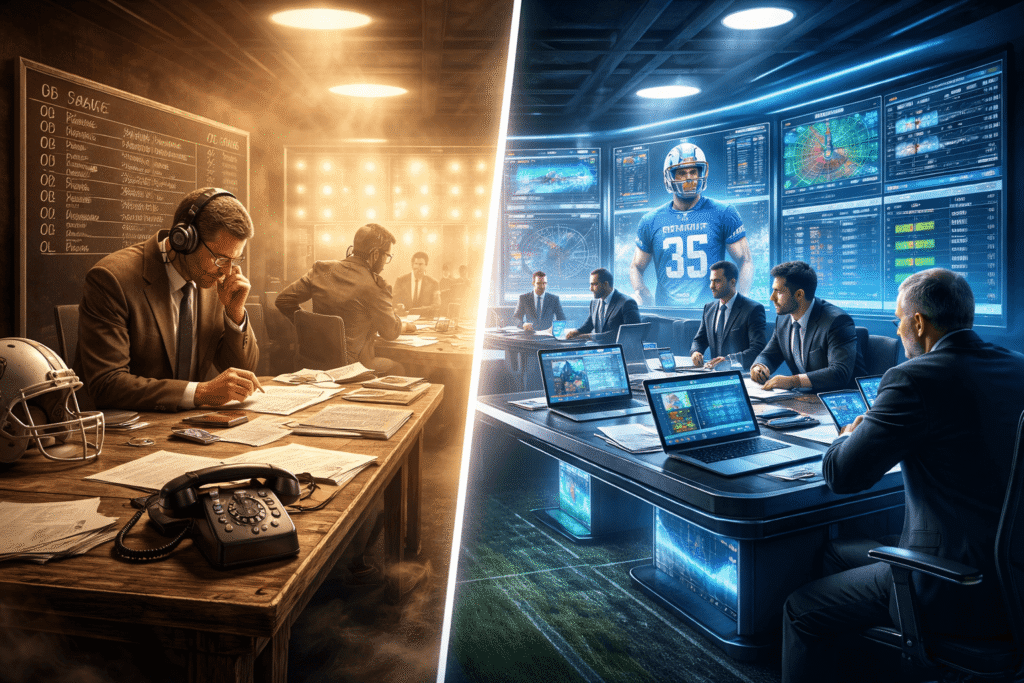
The NFL Draft has been a cornerstone of professional football since its inception in 1936. For decades, it has provided teams with a means to replenish talent and build for the future. While the essence of the draft remains the same—each team selecting players from a pool of eligible college athletes—the strategies surrounding the process have evolved dramatically. From the early days of gut instincts and basic scouting to today’s data-driven decisions and psychological evaluations, the NFL Draft has undergone a remarkable transformation. The Early Years: Drafting by Gut Feeling When the NFL Draft began in 1936, it was a far cry from the highly publicized, multi-day event we see today. In its earliest form, the draft consisted of nine teams picking from a list of players based largely on reputation and limited scouting reports. There were no dedicated scouting departments or combined events to evaluate a player’s skills. Teams relied on what little information they could gather, often focusing on local players they had seen in action or heard about through word of mouth. The idea of using scientific methods or advanced metrics to assess players didn’t exist. In fact, teams rarely even traveled to watch prospects in person. Coaches and general managers often relied on gut feelings, personal relationships with college coaches, and sometimes sheer luck in choosing players. The entire process was informal, with limited analysis of a player’s long-term potential or fit within a team’s system. This led to frequent misjudgments, as teams would often draft players based on size, speed, or name recognition alone, rather than comprehensive assessments. The 1960s to 1980s: The Rise of Scouting As the NFL grew in popularity and teams realized the importance of the draft, organizations began investing more resources into the process. The 1960s saw the rise of dedicated scouting departments, which changed the landscape of draft strategy. Teams now employed scouts to travel the country, attend college games, and gather in-depth information about potential draft picks. These scouts were tasked with evaluating players based on more detailed criteria, including their physical attributes, football IQ, and work ethic. One of the most significant developments during this period was the introduction of the NFL Scouting Combine in 1982. The combine allowed teams to gather comprehensive data on players’ athletic abilities, medical conditions, and mental acuity, all in one location. This created a more structured and scientific approach to drafting, as teams now had access to standardized performance metrics. With the advent of the combine, teams could compare players more objectively based on their 40-yard dash times, vertical jumps, bench press numbers, and more. By the 1970s and 1980s, draft strategies began to incorporate more analytical approaches. Teams started building profiles on players that went beyond simple physical traits. They focused more on how a player fit into their overall system and culture, looking at leadership qualities, versatility, and a player’s potential to grow. This period also saw the rise of the “best player available” strategy, where teams would prioritize drafting the most talented player on the board, regardless of positional need. The 1990s: Data and Advanced Metrics The 1990s marked a new era in draft strategy, as teams began to embrace advanced metrics and statistical analysis. With the explosion of data in sports, NFL front offices realized they could dig deeper into a player’s performance and make more informed decisions. Teams started using computer programs to track player stats, measure efficiency, and predict future performance based on historical data. One of the major shifts during this time was the focus on positional value. Teams started to understand that certain positions—like quarterback, offensive tackle, and edge rusher—had more impact on a team’s success and were therefore worth a higher draft pick. This led to teams prioritizing these positions early in the draft, even if other players were more talented overall. The idea of positional scarcity also took hold, as teams would reach for a player at a position of need if they believed there was a limited pool of talent available. The 1990s also saw a rise in psychological profiling and character evaluations. Teams started to realize that physical talent alone wasn’t enough to guarantee success in the NFL. They began using interviews and psychological tests to assess a player’s mental toughness, leadership qualities, and ability to handle the pressure of professional football. This period laid the groundwork for the comprehensive player evaluations we see today. The Modern Era: Analytics and the Quest for Efficiency Today’s NFL Draft strategies are more sophisticated and data-driven than ever before. Teams now have entire departments dedicated to analytics, using cutting-edge technology and statistical models to evaluate players. The rise of advanced metrics like Pro Football Focus (PFF) grades and Expected Points Added (EPA) has given teams new ways to measure a player’s on-field impact. This era is defined by the integration of both “old school” scouting methods—like in-person evaluations and interviews—and “new school” data analytics. One of the biggest trends in modern draft strategy is the use of predictive analytics. Teams use data to project how a player will perform at the NFL level, taking into account factors like competition level, injury history, and the player’s developmental curve. Machine learning models can analyze thousands of data points from a player’s college career to predict their likelihood of success in the NFL. This shift toward analytics has also changed how teams value draft picks. Rather than viewing them as individual selections, teams often see picks as part of a larger portfolio, where the goal is to maximize overall value through trades and strategic selection. Another key development in modern draft strategy is the emphasis on finding “market inefficiencies.” With every team having access to vast amounts of data, front offices are constantly looking for ways to gain an edge. This has led to strategies like trading down to accumulate more picks, targeting players from smaller schools who are overlooked, or drafting for specific schemes that may undervalue certain positions. Teams are also more willing
Most Common Injuries Faced by NFL Centers
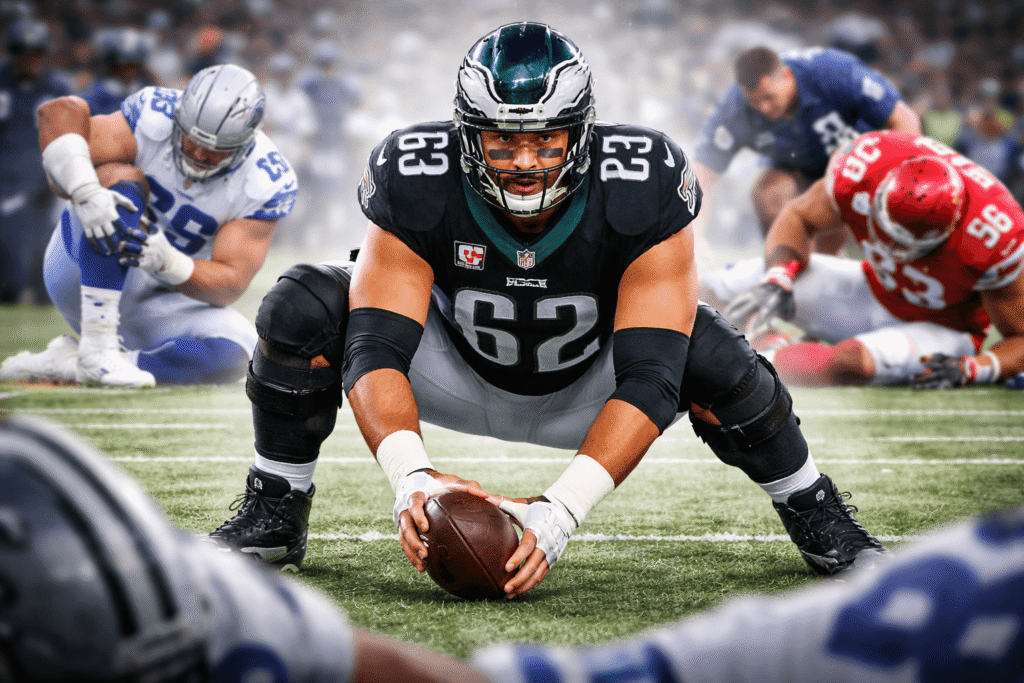
NFL centers play one of the most physically demanding positions in football. Located in the heart of the offensive line, they face aggressive contact on almost every play, making them prone to a variety of injuries. Centers are responsible for snapping the ball, blocking defensive linemen, and reading the defense. Each action requires physicality, strength, and precision, but it also increases their exposure to specific types of injuries. Understanding these injuries, their causes, and prevention techniques is crucial for keeping centers healthy and effective throughout the grueling NFL season. Knee Injuries Knee injuries are among the most prevalent and serious concerns for NFL centers. The frequent pivoting, blocking, and contact from opposing players make their knees vulnerable to injuries such as: Anterior Cruciate Ligament (ACL) Tears: The ACL provides stability to the knee joint, and an awkward tackle or sudden twist can result in its tear. Given the center’s role in blocking defensive rushes while staying grounded, any imbalance or lateral hit can lead to ACL injuries. Medial Collateral Ligament (MCL) Sprains: MCL injuries often result from lateral impact to the knee, common during collisions in the trenches. Centers are regularly involved in scrums where knees can be caught in awkward positions. Meniscus Tears: The meniscus acts as a cushion between the thigh and shin bones. Quick stops, turns, or direct trauma during blocking assignments can cause the meniscus to tear, leading to significant pain and instability. Knee injuries can severely impact a player’s ability to stay low in their stance and generate the explosive power needed to fend off defenders. Recovery from these injuries often requires surgery and extended rehabilitation. Shoulder Injuries Centers rely heavily on their shoulders for blocking, pushing, and maintaining leverage. Repeated collisions can cause various shoulder injuries, including: Rotator Cuff Tears: The rotator cuff consists of muscles and tendons that stabilize the shoulder joint. Continuous pushing against defensive linemen puts immense stress on the shoulder, leading to tears in these muscles. Labral Tears: The labrum is the cartilage that stabilizes the shoulder socket. A center may sustain a labral tear when blocking or tackling, especially if their arm is pulled forcefully. These injuries are common due to the repeated pushing and lifting motions required by the position. Dislocations: The constant impact and strain placed on a center’s shoulders can also lead to dislocations. A shoulder dislocation happens when the arm bone pops out of the shoulder socket, often causing long-term instability if not treated properly. Shoulder injuries can affect a center’s ability to snap the ball accurately, hold blocks, or engage with defenders effectively, making it challenging to perform consistently. Back Injuries Centers spend a large portion of their time in a crouched or bent-over stance, which can lead to significant strain on their lower back. Over time, this can result in: Lumbar Strains: The repetitive bending, twisting, and explosive movement from a low stance can strain the muscles and ligaments in the lower back. These strains can cause intense pain, limiting mobility and flexibility. Herniated Discs: Centers are at risk of developing herniated discs due to the constant pressure placed on their spine. A herniated disc occurs when the soft tissue between the vertebrae pushes out, pressing on nearby nerves. This injury can cause pain, numbness, and weakness in the lower body. Sacroiliac Joint Dysfunction: The sacroiliac joint connects the lower spine to the pelvis and can become inflamed due to the repetitive motions involved in snapping and blocking. This condition causes pain in the lower back and hips, making it difficult for centers to maintain their stance or generate power. Back injuries can significantly affect a player’s ability to maintain a strong base and endure the physical demands of the game. Hand and Finger Injuries Centers are in constant contact with the football and opposing players, leading to a high risk of hand and finger injuries, including: Broken Fingers: Centers frequently jam or break their fingers while snapping the ball or blocking defenders. A broken finger can affect the grip on the ball and the ability to block effectively. Ligament Tears: The repetitive snapping motion combined with the impact from defenders can lead to ligament tears in the fingers or hands, which can affect a player’s dexterity and ability to handle the ball. Dislocations: Finger dislocations are common, particularly when a player’s hand gets caught in an opponent’s jersey or facemask during a block. While not always severe, these injuries can be painful and limit a player’s ability to snap the ball with precision. These injuries can seem minor, but they play a crucial role in a center’s performance. Even small hand injuries can disrupt timing and mechanics, making it difficult to perform consistent snaps Concussions and Head Injuries Although concussions are a concern for all football players, centers are particularly vulnerable due to the nature of their position. The close, high-impact interactions with defensive linemen often result in head collisions, leading to: Concussions: Centers are often engaged in helmet-to-helmet contact at the line of scrimmage. A direct blow to the head can cause a concussion, which affects brain function and can lead to symptoms like headaches, dizziness, and memory problems. Chronic Traumatic Encephalopathy (CTE): Repeated concussions or head impacts increase the risk of developing CTE, a degenerative brain condition. CTE has become a major concern in football, with long-term implications for players’ mental health and cognitive function. Head injuries can have severe consequences, not only for a player’s immediate availability but also for their long-term health and quality of life. Prevention and Management Preventing injuries is crucial for prolonging an NFL center’s career and maintaining their performance level. Here are some key prevention strategies: Strength Training: A strong core, back, and leg muscles can help reduce the strain on joints and ligaments. Building muscle mass also protects vulnerable areas like the shoulders and knees. Flexibility and Mobility Work: Stretching and mobility exercises can help centers maintain flexibility, which is vital for reducing the risk of muscle strains and tears. Regular yoga
Common NFL Long Snapper Injuries: Causes, Risks, and Recovery
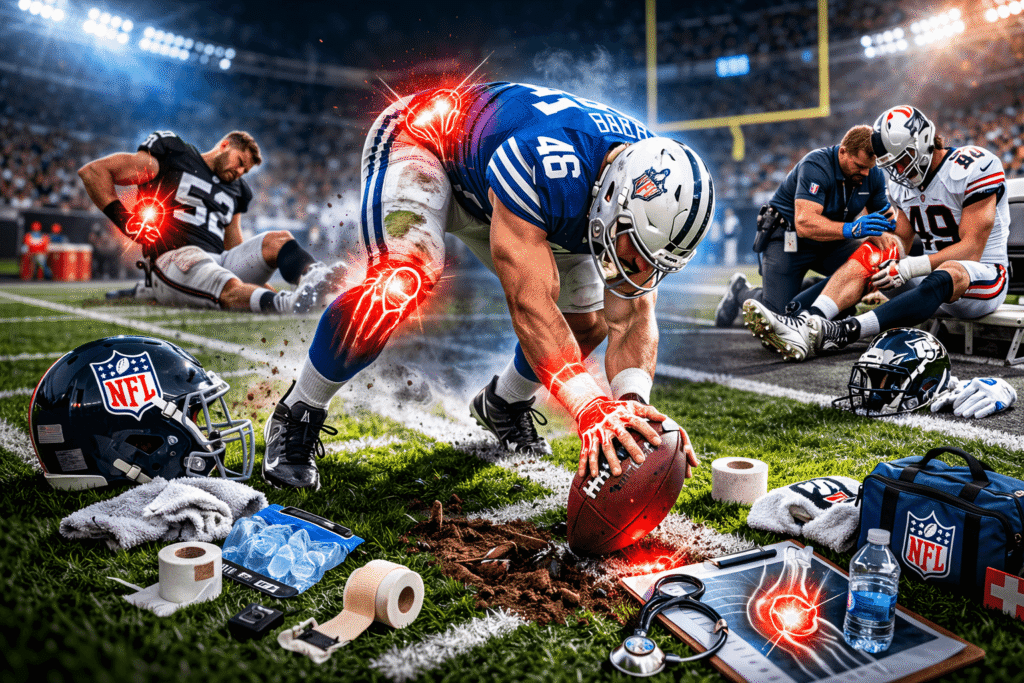
In the physically demanding world of the NFL, all positions are vulnerable to injury, and long snappers are no exception. Though often underappreciated and not as high-profile as quarterbacks, wide receivers, or defensive linemen, long snappers are integral to the success of special teams. They ensure accurate snaps for punts, field goals, and extra points, often under immense pressure. Given the nature of their role, long snappers face a range of injuries, many of which are unique to their position. This blog will explore some of the most common injuries faced by NFL long snappers and how they impact their careers. Shoulder Injuries Shoulder injuries are among the most common and severe injuries for long snappers. Due to the repetitive overhead motion involved in snapping, the shoulder joint, which is inherently unstable, is at high risk for injury. Common shoulder injuries include rotator cuff tears, labrum tears, and shoulder dislocations. These injuries can be debilitating and may require surgery, followed by a lengthy rehabilitation period. Rotator Cuff Tears: The rotator cuff is a group of muscles and tendons that stabilize the shoulder joint. Over time, the repetitive snapping motion can cause wear and tear on these tendons, leading to partial or complete tears. Symptoms include pain, weakness, and limited range of motion, making it difficult to snap the ball accurately. Treatment can range from rest and physical therapy to surgery in more severe cases. Labrum Tears: The labrum is a ring of cartilage that surrounds the shoulder socket and helps stabilize the joint. Long snappers are at risk of tearing their labrum, especially during high-impact plays. A torn labrum can cause pain, instability, and a catching sensation in the shoulder. Like rotator cuff tears, labrum injuries may require surgical intervention and a long recovery process. Shoulder Dislocations: The repetitive motion and physical contact that long snappers endure can also lead to shoulder dislocations. When the upper arm bone pops out of the shoulder socket, it can cause severe pain and instability. Repeated dislocations may require surgery to prevent future occurrences and restore stability to the shoulder joint. Elbow Injuries Elbow injuries are another common problem for long snappers due to the strain placed on the joint during snapping. Conditions such as tendinitis (inflammation of the tendons), ulnar collateral ligament (UCL) injuries, and even fractures can occur. Tendinitis: Long snappers frequently develop tendinitis in the elbow due to overuse. This condition is characterized by inflammation of the tendons that attach muscle to bone, causing pain and tenderness around the elbow joint. Tendinitis can be managed with rest, anti-inflammatory medications, and physical therapy, but it can become a chronic issue if not properly treated. UCL Injuries: The UCL is a ligament on the inner side of the elbow that provides stability to the joint. Repetitive snapping can cause strain or tears in the UCL, leading to pain, weakness, and instability. Severe UCL injuries may require surgery, such as Tommy John surgery, which is more commonly associated with baseball pitchers but can also affect long snappers. Elbow Fractures: Although less common, elbow fractures can occur in long snappers due to high-impact collisions or falls during play. Fractures require immediate medical attention and may necessitate surgery to repair the bone, followed by a period of immobilization and rehabilitation. Back Injuries Long snappers are particularly susceptible to back injuries due to the constant bending and twisting motion required to snap the ball accurately. The lower back, in particular, is at risk for injuries such as muscle strains, herniated discs, and sciatica. Muscle Strains: Bending over repeatedly to snap the ball can lead to muscle strains in the lower back. These strains occur when the muscles are stretched or torn, resulting in pain, stiffness, and difficulty moving. Rest, ice, and physical therapy can help alleviate symptoms, but chronic back issues can significantly impact a long snapper’s performance. Herniated Discs: The spine is made up of vertebrae separated by discs that act as cushions. Repetitive bending and twisting can cause the outer layer of a disc to tear, allowing the inner gel-like substance to protrude. This condition, known as a herniated disc, can compress nearby nerves, leading to pain, numbness, and weakness in the back and legs. Herniated discs often require a combination of rest, physical therapy, and, in severe cases, surgery to relieve symptoms. Sciatica: Sciatica is a condition in which the sciatic nerve, which runs from the lower back down the legs, becomes compressed or irritated. This can result in sharp, shooting pain, numbness, and tingling in the lower back and legs. Long snappers may develop sciatica due to the repetitive motions and physical demands of their position. Treatment typically involves rest, physical therapy, and anti-inflammatory medications, but severe cases may require surgery. Knee Injuries Knee injuries are a concern for all NFL players, and long snappers are no exception. The constant squatting motion, combined with the physical contact during games, can lead to injuries such as anterior cruciate ligament (ACL) tears, meniscus tears, and patellar tendinitis. ACL Tears: The ACL is one of the major ligaments that stabilize the knee joint. Long snappers are at risk of tearing their ACL during sudden changes in direction, awkward landings, or collisions with other players. ACL tears are serious injuries that often require surgery and a lengthy rehabilitation process, potentially sidelining a player for an entire season. Meniscus Tears: The meniscus is a piece of cartilage in the knee that acts as a cushion between the thigh bone and shinbone. Long snappers are vulnerable to meniscus tears due to the repetitive squatting and twisting motions required by their position. Symptoms include pain, swelling, and limited range of motion. Treatment options range from rest and physical therapy to surgery, depending on the severity of the tear. Patellar Tendinitis: Also known as “jumper’s knee,” patellar tendinitis is an overuse injury that affects the tendon connecting the kneecap to the shinbone. Long snappers may develop patellar tendinitis due to the repetitive stress placed on the knee joint during snapping.
Common Injuries Faced by NFL Placekickers
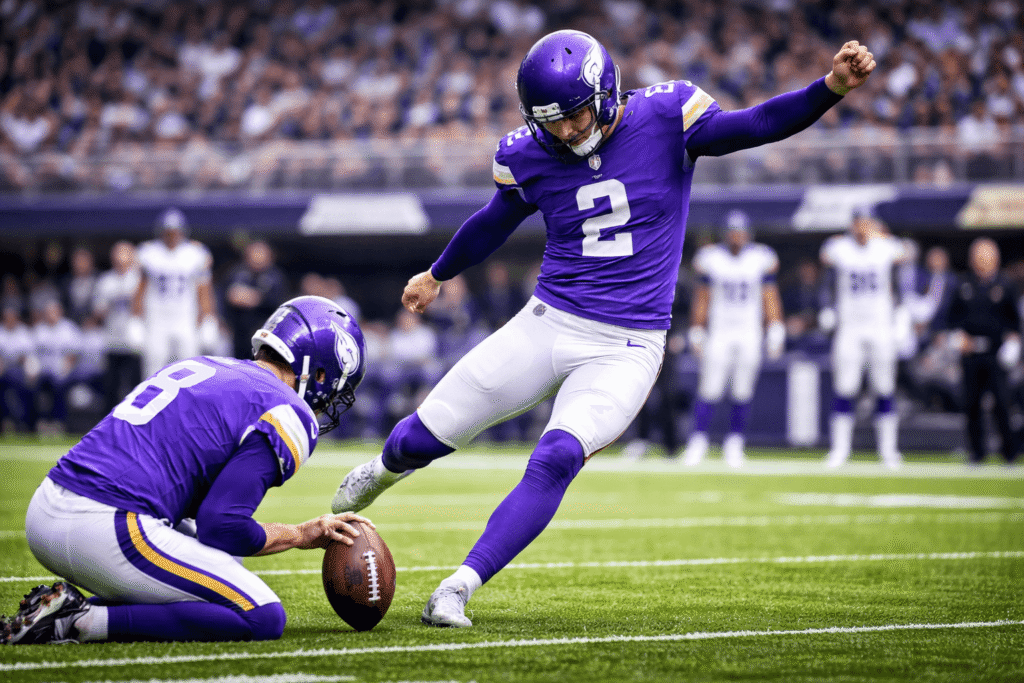
Placekickers in the NFL are a unique group of athletes whose primary role is to score points through field goals and extra points, as well as executing kickoffs. Although their position may seem less physically demanding compared to others in football, placekickers are not immune to injuries. The repetitive nature of their kicking motion, combined with the high level of precision required, can lead to various injuries over the course of a season. This blog will explore the most common injuries faced by NFL placekickers and provide insights into why these injuries occur, along with strategies for prevention and recovery. Hamstring Injuries Hamstring injuries are common in many sports, and placekickers are no exception. The hamstrings, located at the back of the thigh, work in conjunction with the quadriceps during the kicking motion. They help control the leg’s movement and decelerate the leg after the kick. Causes: A placekicker’s hamstrings are subject to significant stress during the follow-through phase of the kick. Sudden movements, improper warm-up, or muscle imbalances can lead to hamstring strains or tears. Prevention: Maintaining flexibility and strength in both the hamstrings and quadriceps is essential to preventing hamstring injuries. Regular stretching and strengthening exercises are key components of an effective injury prevention strategy. Treatment: Rest, physical therapy, and a gradual return to activity are typical treatments for hamstring injuries. Severe hamstring tears may require more extended periods of rest and rehabilitation. Knee Injuries Knee injuries can be particularly concerning for placekickers, as the knee is a central component of their kicking mechanics. An injury to the knee can severely impact a kicker’s ability to perform effectively, and in some cases, may sideline them for an extended period. Causes: Knee injuries in placekickers can result from the repetitive stress of kicking, direct contact during a game, or non-contact mechanisms such as sudden changes in direction. Overuse injuries, such as patellar tendinitis (also known as “jumper’s knee”), are also common due to the repetitive motion of kicking. Prevention: Strengthening the muscles around the knee, including the quadriceps and hamstrings, can help provide stability and reduce the risk of injury. Proper warm-up routines and stretching exercises are also crucial in maintaining knee health. Treatment: Depending on the severity of the injury, treatment can range from rest and physical therapy to surgery in cases of ligament tears or significant damage. Rehabilitation is typically focused on restoring strength, stability, and range of motion in the knee. Ankle Sprains Although less common than other injuries, ankle sprains can still occur in placekickers, particularly during kickoffs when there is a higher chance of twisting or rolling the ankle. Ankle sprains can limit a kicker’s ability to plant their foot and generate power for their kicks. Causes: Ankle sprains can occur when a kicker lands awkwardly after a kick or when their foot twists during the planting phase. Additionally, contact with other players during the game can lead to ankle injuries. Prevention: Strengthening the muscles around the ankle and maintaining good flexibility can help prevent ankle sprains. Wearing supportive footwear and using ankle braces or taping techniques may also provide additional protection. Treatment: Treatment for ankle sprains typically involves rest, ice, compression, and elevation (RICE), along with physical therapy to restore strength and mobility in the ankle. Lower Back Pain Lower back pain is a common complaint among placekickers, largely due to the twisting and hyperextension involved in the kicking motion. The lower back is subject to significant stress as the kicker swings their leg and follows through with the kick. Causes: Poor kicking technique, overuse, and muscle imbalances can all contribute to lower back pain in placekickers. The repetitive nature of kicking, combined with the force exerted on the spine, can lead to muscle strains, disc issues, or other forms of lower back pain. Prevention: Core strengthening exercises, along with proper warm-up and stretching routines, can help prevent lower back pain. Focusing on maintaining good posture and proper kicking mechanics is also essential for reducing the risk of injury. Treatment: Rest, physical therapy, and exercises that target core stability and flexibility are common treatments for lower back pain. In some cases, chiropractic care or other forms of manual therapy may be helpful. Groin Strains Groin strains are one of the most common injuries among NFL placekickers. The groin muscles are heavily involved in the kicking motion, particularly when generating power and controlling leg movement. Placekickers are required to repeatedly exert force with their kicking leg, which can lead to overuse and eventual strain of the groin muscles. Causes: The explosive action of kicking places a significant load on the adductor muscles, which are responsible for bringing the legs together. The repetitive stretching and contraction of these muscles during kicking can cause microtears, leading to strains. Prevention: Strengthening the core and hip muscles, along with regular stretching, can help prevent groin strains. Proper warm-up routines are also essential to ensure the muscles are adequately prepared for the demands of kicking. Treatment: Rest, ice, and physical therapy focused on strengthening and flexibility exercises are common treatments for groin strains. Severe cases may require a longer recovery period or even surgery in extreme scenarios. Quadriceps Strains The quadriceps muscle group, located at the front of the thigh, is crucial for kicking. The quadriceps are responsible for extending the knee, which is a key part of the kicking motion. Like groin strains, quadriceps strains can occur due to the repetitive nature of kicking. Causes: Overuse is a primary cause of quadriceps strains in placekickers. The powerful leg swing required to kick the ball puts the quadriceps under constant strain, increasing the risk of injury. Prevention: Strength training that focuses on the quadriceps, hamstrings, and hip muscles can help reduce the risk of strains. Additionally, ensuring proper technique and avoiding overtraining are critical for injury prevention. Treatment: Treatment typically involves rest, ice, compression, and elevation (RICE), along with physical therapy to restore strength and flexibility. Recovery times vary depending on the severity of the strain. Hip Flexor
8 Most Common Injuries Faced by NFL Cornerbacks
In the fast-paced world of the NFL, cornerbacks are the guardians of the defense, tasked with shutting down some of the most explosive players on the field. These athletes need to be fast, agile, and smart, making split-second decisions while keeping up with elite wide receivers. But with the immense physical demands of the position comes a high risk of injury. Let’s take a closer look at eight of the most common injuries that cornerbacks face, and what makes these injuries so prevalent in their line of work. Hamstring Strains Hamstring strains are the bane of any speed-dependent athlete, and cornerbacks are no exception. These injuries occur when the muscles at the back of the thigh are overstretched or torn, usually during high-speed sprints or sudden changes in direction—something cornerbacks do on nearly every play. The problem with hamstring injuries is that they tend to linger. A cornerback who pushes to get back on the field too soon risks re-injury, leading to a vicious cycle that can derail a season. Even after healing, the fear of re-injury can affect a player’s confidence and willingness to go all-out, which is essential for a position that relies so heavily on speed and reaction time. Knee Injuries Knee injuries are a common, and often devastating, occurrence for cornerbacks. The most feared of these is the ACL (anterior cruciate ligament) tear, which can sideline a player for an entire season. ACL injuries usually happen during a sudden stop or change in direction—something cornerbacks are constantly doing as they react to a wide receiver’s route. But it’s not just ACLs that are at risk. Meniscus tears and MCL (medial collateral ligament) sprains are also prevalent. These injuries are particularly concerning because they don’t just heal overnight. They often require surgery and extensive rehabilitation, and even then, a player may never return to their pre-injury level of performance. The physical and psychological toll of a knee injury can be immense, with players having to overcome both the pain and the mental barrier of trusting their knee again Concussions Concussions are a serious concern across all positions in football, but cornerbacks are particularly at risk due to the nature of their play. Whether it’s making a tackle, colliding with a receiver, or even getting blindsided during a play, cornerbacks are frequently involved in high-impact collisions. The NFL has made strides in concussion awareness and management, but the reality is that these injuries are still a part of the game. Concussions can have both immediate and long-term effects, ranging from headaches and dizziness to more severe issues like memory loss and cognitive impairment. For a cornerback, who needs to be sharp and quick-thinking, the repercussions of a concussion can be career-threatening. What’s more, repeated concussions can lead to chronic traumatic encephalopathy (CTE), a degenerative brain disease that has affected many former players. Ankle Sprains Ankle sprains are one of the most common injuries in football, and cornerbacks are no strangers to them. The constant need to pivot, backpedal, and change direction at full speed puts tremendous stress on the ankles. A wrong step or awkward landing can easily lead to a sprain, where the ligaments in the ankle are stretched or torn. While ankle sprains might not seem as severe as other injuries on this list, they can still be incredibly disruptive. A severe sprain can keep a player off the field for weeks, and even a minor sprain can affect a cornerback’s mobility and effectiveness. Worse still, if an ankle isn’t given the proper time to heal, it can become a recurring issue, leading to chronic instability and a higher likelihood of future sprains. Shoulder Injuries Cornerbacks often have to tackle players much larger than themselves, which puts their shoulders at significant risk. Whether it’s a dislocation, a rotator cuff tear, or an AC joint sprain (where the collarbone meets the shoulder blade), shoulder injuries are a common and painful reality for cornerbacks. These injuries can be particularly troublesome because they affect a player’s ability to tackle, jam receivers at the line of scrimmage, and reach for interceptions. Even after treatment, shoulder injuries can be prone to recurrence, and the constant physical demands of football can make complete recovery difficult. Many cornerbacks play through shoulder injuries with the help of braces or injections, but this can lead to long-term damage and a shortened career. Groin Strains Groin strains are another common injury among NFL cornerbacks, caused by the sudden lateral movements and quick bursts of speed that define their role. The groin muscles, located in the inner thigh, are crucial for these movements, and when they’re overstretched or torn, it can result in a painful strain. These injuries are particularly frustrating because they can be slow to heal and easily aggravated. Cornerbacks often need to make quick cuts and change direction at a moment’s notice, which can put significant strain on the groin. If not managed properly, a groin strain can become a chronic issue, impacting a player’s agility and explosiveness. Foot Fractures Foot fractures are a less frequent but serious injury for cornerbacks. The bones in the foot, particularly the metatarsals, can be fractured by a direct blow or by the constant stress of running, cutting, and jumping. A common foot injury in football is a Jones fracture, which occurs in the fifth metatarsal on the outside of the foot. These injuries can be particularly debilitating for a cornerback because they directly impact their ability to run and make quick movements. Treatment often requires surgery and a lengthy recovery period, during which the player is completely sidelined. Even after returning to play, the foot may never fully regain its previous strength, leading to potential long-term issues and a higher risk of re-injury. Hip Labral Tears The hip labrum is a ring of cartilage that surrounds the hip socket, helping to keep the ball of the joint in place. Cornerbacks, with their need for quick changes in direction and explosive movements, are at risk for tearing
Breakout WRs – Identifying the studs
This is a list of all the relevant WRs from each WR class over the past 7 years, and the ones highlighted in green have a top 24 finish (PPR) to their name. As you can see from the 2017-2021 classes, there are at least 4 top 25 WRs in each class. The 2019 and 2020 draft classes were loaded, and currently make up the majority of the top 10. From 2024’s current top 10 in ADP (Lamb, Hill, Jefferson, Chase, ARSB, AJB, Puka, Wilson, Adams, and Marvin Harrison Jr) 7 were drafted from 2019-2023. The exceptions include Tyreek Hill (2016), Davante Adams (2014) and Marvin Harrison Jr. (2024). Only 13 rookie WRs finished in the top 24 in their rookie season over the past 7 years, see chart below. All but 3 finished WR13+. The exceptions: Puka Nacua, Ja’Marr Chase and Justin Jefferson. The 3rd year breakouts seem to be common. The following WRs broke out in their 3rd season: Cooper Kupp (WR24, WR51, WR5), Chris Godwin (WR67, WR29, WR2), Deebo Samuel (WR32, WR96, WR3), Diontae Johnson (WR41, WR21, WR8) Hunter Renfrow (WR54, WR60, WR11), CeeDee Lamb (WR22, WR19, WR5), Brandon Aiyuk (WR35, WR35, WR15), Tee Higgins (WR28, WR24, WR18) Jerry Jeudy (WR47, WR85, WR22) and Nico Collins (WR86, WR77, WR12) The most likely 3rd year breakout candidates in 2024 are Garrett Wilson (WR21, WR26), Chris Olave (WR25, WR16) and Drake London (WR21, WR37) There are a couple of other players that have an outside chance, including: Christian Watson (WR41, WR68), George Pickens (WR39, WR30) Jameson Williams (WR154, WR82), Romeo Doubs (WR72, WR36), Jahan Dotson (WR51, WR56), Treylon Burks (WR78, WR123), Wan’Dale Robinson (WR115, WR53), Khalil Shakir (WR130, WR61) and John Metchie III (N/A, WR138) The following have potential to break out in their 4th year: Rashod Bateman (WR69, WR112, WR85), Elijah Moore (WR49, WR81, WR54), Josh Palmer (WR75, WR37, WR65) There are about 19 rookie WRs that could finish in the top 24, but realistically only about 6. Those names are: Marvin Harrison Jr., Malik Nabers, Xavier Worthy, Ladd McConkey, Keon Coleman and Brian Thomas Jr. Finished Top 24 2017 (5) 2018 (6) 2019 (7) 2020 (7) 2021 (5) 2022 (2) 2023 (2) 2024 Cooper Kupp D.J. Moore A.J. Brown CeeDee Lamb Ja’Marr Chase Garrett Wilson Puka Nacua Chris Godwin Calvin Ridley Deebo Samuel Justin Jefferson Amon-Ra St. Brown Chris Olave Jordan Addison Mike Williams Christian Kirk D.K. Metcalf Brandon Aiyuk Jaylen Waddle JuJu Smith-Schuster Courtlard Sutton Diontae Johnson Tee Higgins DeVonta Smith Kenny Golladay D.J. Chark Marquise Brown Michael Pittman Jr. Nico Collins Michael Gallup Terry McLaurin Chase Claypool Hunter Renfrow Jerry Jeudy Had fantasy impact but never a top 24 season: Corey Davis Marquez Valdes-Scantling Mecole Hardman Henry Ruggs III Kadarius Toney Drake London Jaxon Smith-Njigba Marvin Harrison Jr. Curtis Samuel Tre’Quan Smith Parris Campbell Gabriel Davis Rashod Bateman Christian Watson Quentin Johnston Malik Nabers Zay Jones Justin Watson Darius Slayton Laviska Shenault Jr. Elijah Moore Geoge Pickens Zay Flowers Rome Odunze Josh Reynolds Van Jefferson Rondale Moore Jameson Williams Jonathan Mingo Brian Thomas Jr. Mack Hollins Gabriel Davis Josh Palmer Romeo Doubs Jayden Reed Xavier Worthy Noah Brown Darnell Mooney Jahan Dotson Rashee Rice Ricky Pearsall Donovan Peoples-Jones Treylon Burks Marvin Mims Jr. Xavier Legette Wan’Dale Robinson Tank Dell Keon Coleman Khalil Shakir Dontayvion Wicks Ladd McConkey John Metchie III Josh Downs Ja’Lynn Polk Demario Douglas Adonai Mitchell Jalin Hyatt Malachi Corley Cedric Tillman Jermain Burton Michael Wilson Roman Wilson Tre Tucker Jalen McMillan Tyler Scott Luke McCaffrey Troy Franklin Javon Baker Devontez Walker Finished Top 24 in rookie season Players Class of Rookie Season Finish Puka Nacua 2023 WR4 Ja’Marr Chase 2021 WR5 Justin Jefferson 2020 WR6 Jaylen Waddle 2021 WR13 Juju Smith-Schuster 2017 WR20 Amon-Ra St. Brown 2021 WR21 A.J. Brown 2019 WR21 Garrett Wilson 2022 WR21 CeeDee Lamb 2020 WR22 Calvin Ridley 2018 WR22 Jordan Addison 2023 WR23 Chase Claypool 2020 WR24 Cooper Kupp 2017 WR24 Total # of WRs drafted Total # of WRs drafted 2017 32 2018 34 2019 28 2020 35 2021 35 2022 28 2023 33 225 5.7%
News & Notes – Week ending July 28
Here are some thoughts on various players as training camp begins, some players are holding out, others are injured and some are coming back from injury. Aaron Rodgers has returned and has a noticeable size difference in his left calf, which is the side he tore his Achilles. Not overly concerning. He doesn’t rush anymore, but he still has the arm strength and elite mental skills to help Garrett Wilson become a top five monster. Several of the San Francisco 49ers are already including Ricky Pearsall, Isaac Guerendo and Jacob Cowing. I expect Pearsall to be back next week, but Guerendo and Cowing could miss a couple weeks which will set their learning and timelines back. Brandon Aiyuk is holding out and I have no idea how this situation is going to play out. People are sleeping on Keenan Allen. He’s primed for a MONSTER 2024 season as he will always be open and Caleb Williams will look for him early and often. Forget the age, go get him, reach for him if you have to as your WR2. OC Kellen Moore made CeeDee Lamb a beast in 2022 and Keenan Allen in 2023, now it’s DeVonta Smith’s turn. Expect a ton of pre-snap motions and Hurts looking for Smith. Smith could put up WR1 numbers but is priced as a WR2. He has yet to miss a game due to injury in his first 3 years. Garrett Wilson is going to challenge for the WR1 overall if he and Rodgers both stay healthy. Wilson is elite in success rate versus man, zone and press coverage. He ran the most routes in 2023 (666), he was 4th in targets (168), and 7th in target share (30.1%). Now he has Aaron Rodgers throwing to him. Whatever the season-long prop TD bet is, take the over. I am. I’m still not sure what to make of this Bengals backfield. With Mixon now in Houston, it appears that Zack Moss will split/fight with Chase Brown for touches. Moss has struggled with injuries so don’t spend too much on him. It’s a wait and see for me right now. I was genuinely astonished when Troy Franklin kept falling during the draft. He is one of only 3 rookie WRs to average 3.00+ YPRR in a college season and declare early. The other two are Marvin Harrison Jr., and Malik Nabers. He’s essentially free and playing with his college QB, so the rapport is a given. Courtland Sutton should be the WR1, and Marvin Mims Jr. the WR2, but Franklin only really has to battle Josh Reynolds for targets. Perfect late round add with loads of upside. I have zero interest in Zamir White. Not only has he torn his ACL twice, but in the 4 games he started in 2023 they all came against teams ranked 21st or lower in run defense DVOA (℅ @GuruFantasyWrld). He’s nothing special, will be volume dependent and I’d rather have guys with higher upside. If Andy Reid lines up Xavier Worthy in the X spot for the Chiefs, watch out. In college Worthy ran 48% of his routes at the X position and his YPRR was 2.98 and he had a 30.4% target PRR. On all other routes his rates were 1.71 and 26%. Worthy also has the 2nd best YPRR against press coverage out of all the WRs drafted in 1st round since 2017, second only to Devonta Smith. Info courtesy of @Jagibbs_23. He will be joining Rashee Rice, Hollywood Brown, as well as Travis Kelce. This Chiefs offense might be the best we’ve ever seen from Mahomes so far. Yes that even includes the Tyreek Hill years. Speaking of Rashee Rice, there are rumblings that his initial court date isn’t until December. If that’s the case, the NFL is unlikely to punish him in 2024, as I think it’s unlikely they penalize him without knowing the full extent of the crime. He is the WR1 in this offense and is currently being discounted because of the unknown of possible suspension. Reap the rewards and secure him as a WR3 with WR1 upside. People are sleeping on Curtis Samuel. His ADP is currently at WR49, a WR4, but he’s really only competing with Khalil Shakir and rookie Keon Coleman for WR targets. Yes Dalton Kincaid, Dawson Knox and MVS are there too. He will take handoffs out of the backfield and was grossly missed in Washington. Would not be surprised if he finished as the WR1 for the Bills this year. Jordan Addison has been involved with a couple different situations with the law since arriving in the NFL. His most recent DUI arrest, I would not be surprised if he gets suspended a couple games. I was already off him because I expect some regression, but now he’s on my Do Not Draft list. I’ve been keeping a tally of Injuries that you can. follow along with on the website, click the tab ‘Injury Report.’
The Rise of Achilles Tears in the NFL
Written by: Jesse Morse, MD, CAQSM www.TheInjuryExpertz.com July 26, 2024 There has been a significant rise in Achilles tears over the past 15 years in the NFL, accentuated by two of the top quarterbacks, Aaron Rodgers and Kirk Cousins, both suffering this injury in 2023. The Achilles tendon is capable of handling up to 10 times the body weight during explosive movements. There is an area of poor blood flow about 2-6 cm from the insertion in the calcaneus, the narrowest segment of the tendon, and that is where most ruptures occur. The rupture often happens due to acute loading during acceleration or deceleration. This article attempts to answer two different questions: Have Achilles Tendon Injuries significantly increased to unacceptably high incidence levels in the NFL? What are the underlying causes of the high incidence levels of Achilles Tendon ruptures in the NFL? I will be referencing an article that was published earlier in 2024 with some solid reference points and research, but also adding my opinion. For the general public, a study from Finland completed in 2022 revealed a significant increase in the incidence of Achilles Tendon Ruptures (ATRs), from a rate of 2.1 per 100 person-years in the late 1990s, to 21.5 per 100 person-years as of 2019. That’s a 10x increase in about 30 years! There is some speculation that one of the primary causes of this is the increase of activity of adults in their 30s playing racket sports, soccer and basketball, but this is likely a multifactorial issue secondary to oral antibiotics, steroids, diabetes, diet related. Now let’s apply this change to the NFL. The rate of Achilles Tendon Ruptures (ATRs) has doubled from 0.341 injuries per 10,000 athlete-exposures in 2009 to 0.731 in 2016. The COVID-19 pandemic further contributed to this rise, with a marked increase in ATR cases during 2020 and 2021. There were a total of 22 NFL players that suffered Achilles tears during the 2023 season alone! From 1980 to 2001 there were approximately 4 Achilles tendon ruptures (ATRs) per NFL season. From 1997 to 2002 there were approximately 5 Achilles tendon ruptures (ATRs) per year. The research conducted by Hewett et al concluded that a large increase in the prevalence of Achilles tendon ruptures in the NFL in the season following the 2011 season lock-out, especially in the preseason, in which 12 ruptures occurred. An article from Yang et al demonstrated that the overall return to play (RTP) rate from an Achilles tear in the NFL is 61.3%. Despite initial thoughts, risk factors like age, number of prior seasons, position type, and draft round status did not significantly affect the RTP when evaluated with Kaplan-Meier analysis. For those players that were able to return, the performance only in the season immediately following injury appears to be affected. I actually disagree with this finding specifically for running backs, as we have seen this position affected, performance-wise, the most by Achilles tendon ruptures. Several players (RBs) that have suffered an Achilles tear have never returned to preinjury form, including James Robinson, Cam Akers, and Marlon Mack. Between 2009-2014 there was a significantly increased prevalence of Achilles tendon ruptures (ATRs) to between 13 and 16 ruptures per year. This is consistent with a study by Krill et al, which showed that from 2010-11 to 2016-17 there were a total of 109 Achilles tendon ruptures (ATRs), that is an average of 15.5 per year. Since then, based on reporting on social media over the last 3 seasons have averaged 17 Achilles tendon ruptures per year, culminating with the 2023 season having from what I can tell is the highest single-season ever of 22 Achilles tendon ruptures. There is no doubt that the prevalence of ATRs in the NFL has increased between 300-500% over the past 30 years. The study from Hewett et al concluded that there are four reasons that most likely account for the significant rise in Achilles tendon ruptures in the NFL. Based on evidence-based hypotheses and historic injury risk modeling, these are the four most likely reasons for the rise in order of relative potential predictive power: Demographic and anthropometric factors are always important and come out of nearly every injury risk profile assessment: age, activity level, height, body mass, and BMI may play significant roles. With the exception of age, all are increasing in the NFL. These are examples of non-modifiable factors. Simply put, guys are bigger, fast, and stronger than ever before, but their tendons are not. The absence of sufficient preparatory training, such as heavy eccentrics. This has likely increased due to the new collective bargaining agreements between the NFL and NFLPA, which restrict team access to players during the off-season. Surface (newer generation rubberized turf versus grass) shoe, rigid ankle taping, and bracing. In my opinion this is a huge factor. Grass ‘gives way’ when a player wearing cleats cuts on it, thereby dissipating the energy through the grass. With the introduction of rubberized turf, the molecular structure of the rubber does not allow for the energy to dissipate and cut the rubber like it would with grass. Therefore that energy gets displaced throughout the joint and soft tissues, leading to microtears. Repetitive microtears eventually lead to weakness of the ligaments and tendons. The use of anabolic and corticosteroids. The unknown and upregulated use of these drugs is unknown but have likely increased. While cortisone is not as commonly used as previously, some physicians are still willing to inject this, which weakens the surrounding tissue, thereby increasing the risk of future rupture. There are other potential contributors that are possible as well, including compensation as a result of other lower extremity injuries that the players have suffered. A study by Krill et al demonstrated that foot injuries to the contralateral limb previously may have contributed to subsequent rupture of the Achilles tendon. This is what we saw with J.K. Dobbins, who tore his left ACL in 2021, then his right Achilles in 2023. Surgical treatment for
10 Worst Injuries in NFL History: Shocking and Devastating Moments
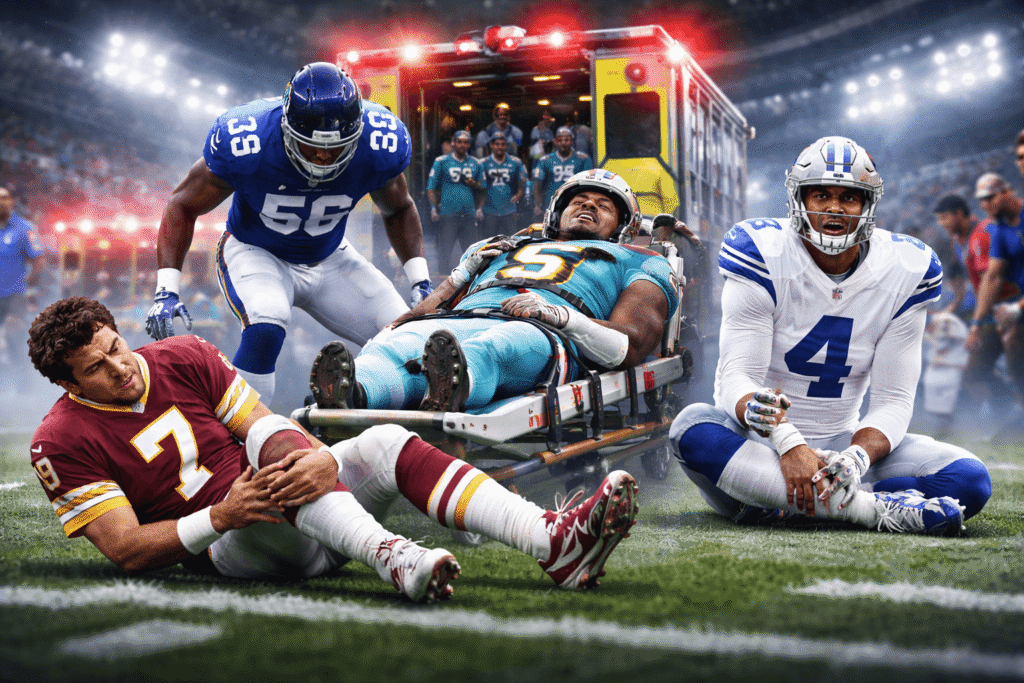
The NFL is a league known for its intensity and physicality, where the stakes are high and the risks even higher. Over the years, we’ve witnessed some of the most thrilling plays and breathtaking moments. However, along with the glory comes the agony of injuries. Some injuries not only end careers but also have a lasting impact on players’ lives. Here, we delve into ten of the worst injuries in NFL history, highlighting their severity and the stories behind them. Joe Theismann’s Leg Injury (1985) One of the most infamous injuries in NFL history occurred on November 18, 1985. Washington Redskins quarterback Joe Theismann suffered a gruesome leg injury during a game against the New York Giants. Lawrence Taylor, a linebacker for the Giants, sacked Theismann, causing a compound fracture of his tibia and fibula. The injury was so severe that it effectively ended Theismann’s career. The image of Theismann’s leg bending unnaturally remains one of the most haunting in sports history. Darryl Stingley’s Paralysis (1978) Darryl Stingley, a wide receiver for the New England Patriots, experienced one of the most tragic injuries in NFL history. During a preseason game against the Oakland Raiders in 1978, Stingley was hit by Jack Tatum. The collision resulted in Stingley suffering two fractured vertebrae and a compressed spinal cord, leaving him paralyzed from the chest down. This injury brought significant attention to the dangers of the game and the need for safer play. Bo Jackson’s Hip Injury (1991) Bo Jackson was a dual-sport star, excelling in both baseball and football. His football career, however, was cut short due to a severe hip injury. In a 1991 playoff game, Jackson dislocated his hip during a tackle. This injury led to avascular necrosis, causing the bone tissue to die due to lack of blood supply. Despite attempting a comeback, Jackson’s football career was effectively over, though he continued to play baseball for several more years. Johnny Knox’s Spinal Injury (2011) Chicago Bears wide receiver Johnny Knox suffered a career-ending spinal injury on December 18, 2011. During a game against the Seattle Seahawks, Knox was hit hard, causing his body to bend backward in an unnatural position. He fractured a vertebra and required spinal fusion surgery. Despite a long and arduous recovery process, Knox was never able to return to the field, marking the end of his NFL career. Reggie Brown’s Spinal Cord Injury (1997) In December 1997, Detroit Lions linebacker Reggie Brown suffered a life-threatening spinal cord injury during a game against the New York Jets. Brown attempted to make a tackle and ended up with his head colliding with another player’s thigh, resulting in a severe neck injury. He lost consciousness and had to be resuscitated on the field. The injury ended his football career, but thankfully, Brown recovered enough to lead a normal life afterward. Dennis Byrd’s Paralysis (1992) New York Jets defensive end Dennis Byrd’s career was abruptly ended on November 29, 1992, when he collided with a teammate while trying to sack the opposing quarterback. The collision resulted in a broken neck and temporary paralysis. Although Byrd was told he might never walk again, he made a miraculous recovery, regaining his ability to walk but never returning to professional football. Napoleon McCallum’s Knee Injury (1994) In a Monday Night Football game in 1994, Los Angeles Raiders running back Napoleon McCallum suffered a devastating knee injury. As he was tackled, McCallum’s leg bent backward grotesquely, tearing multiple ligaments, rupturing an artery, and severely damaging the nerve. The injury was so severe that it not only ended his football career but also nearly led to the amputation of his leg. Kevin Everett’s Spinal Cord Injury (2007) Buffalo Bills tight end Kevin Everett’s career-ending injury occurred during the 2007 season opener. After making a tackle on a kickoff return, Everett fell to the ground motionless. He had suffered a severe spinal cord injury that initially left him paralyzed. Immediate and innovative medical intervention, including the use of cold therapy to reduce swelling, allowed Everett to regain movement and eventually walk again, though he never played football again. Eric LeGrand’s Paralysis (2010) In October 2010, while playing for Rutgers University, Eric LeGrand suffered a severe spinal cord injury during a game against Army. The collision left him paralyzed from the neck down. His injury, while occurring in college, is often discussed in the context of the NFL due to the similarities in the level of play and the risks involved. LeGrand has since become an inspirational figure, advocating for spinal cord injury research and recovery. Alex Smith’s Leg Injury (2018) Washington Redskins quarterback Alex Smith experienced a life-threatening leg injury on November 18, 2018. During a game against the Houston Texans, Smith was sacked and suffered a compound fracture of his tibia and fibula, reminiscent of Joe Theismann’s injury 33 years earlier to the day. Complications arose, including infections that required 17 surgeries and nearly led to an amputation. Remarkably, Smith made an incredible comeback, returning to play in the NFL in 2020 before retiring. The Human Toll of Football These injuries underscore the brutal nature of professional football. While the sport brings excitement and joy to millions, it also carries significant risks for the athletes. The physical and emotional toll on players and their families is immense. Many of these injuries have led to improved safety protocols and changes in the rules to protect players better. However, the inherent danger remains a stark reminder of the price of glory in the NFL. In reflecting on these injuries, we see not only the physical damage but also the resilience and courage of these athletes. Their stories are a testament to the human spirit’s capacity to overcome adversity, adapt to new realities, and inspire others. Whether they managed to return to the game or transitioned to new paths in life, their experiences continue to impact the NFL and its fans profoundly.
Favorite Stats of the Week: July 12 edition
Here are some of my favorite stats that I’ve read this week: Tony Pollard in his first eight games of 2023: 6.7% – Avoided tackle rate 2.6 — Yards after contact per rush Pollard’s final nine 2023 games: 28.8% – Avoided tackle rate 3.2 — Yards after contact per rush (@jagibbs_23) Take Home Point: Pollard was still recovering from his late 2022 ankle injury early in 2023, but by the last 9 games he looked much better. Sleeper for 2024, great RB2 value for a guy who finished as the RB8 in 2022. Expecting one of biggest schematic changes this season to come from #Titans. Had 3+ WRs on the field just 58% of the time last season, 25th in NFL. Replace Derrick Henry with two space RBs Bring in Brian Callahan, whose Bengals had 3+ WRs on field 78% last season (3rd-most) Give Calvin Ridley $50M guaranteed, add Tyler Boyd, hang onto DeAndre Hopkins + Treylon Burks (@adamlevitan) Take Home Point: Values up for Pollard, Spears, Ridley, Hopkins, Boyd & Levis. I like Boyd as a late sleeper. The Cincinnati Bengals ran the 2nd and 4th highest% of 11-personnel over the last two seasons under Brian Callahan. Tyler Boyd had the 4th most targets from the slot last year (6th in 2022). Boyd is now with Callahan in Tennessee. Current ADP: WR83 Deep league alert (@DrewDavenportFF) Take Home Point: Callahan now in TEN, Tyler Boyd is basically free, and there’s a good chance he will be serviceable. Unless you’re in a 10 team league or super shallow, I wouldn’t leave your draft without Boyd. Catchable throw rate on attempts 10+ yards downfield Top 10: Tua Tagovailoa – 73.8% Jared Goff – 73.5% Brock Purdy – 73.3% Kirk Cousins – 71.8% Dak Prescott – 71.4% Jalen Hurts – 70.7% Lamar Jackson – 70.6% Joe Burrow – 69.7% Russell Wilson – 69.0% Patrick Mahomes – 68.7% Bottom 6: Justin Fields – 60.6% Baker Mayfield – 59.2% Bryce Young – 59% Joe Flacco – 58% Kyler Murray – 57.5% Will Levis – 56.7% (@FantasyDataPts) Take Home Point: Tua throws the best deep ball in the NFL. Tyreek & Waddle are top 10 WRs as a result, but don’t sleep on Malik Washington. I have no faith in OBJ. The bottom 6 is particularly concerning, especially for Kyler Murray and Will Levis. Murray got a monster in Marvin Harrison Jr., so maybe that boosts his deep throw rate. Levis has lots of weapons but struggles to throw a good deep ball plus his OLine is one of the worst in the league. Avoided tackle rate leaders at RB in 2023: 35.6% – Jaylen Warren 28.8% – James Conner 28.2% – De’Von Achane 26.0% – Tyjae Spears 25.8% – Raheem Mostert 25.6% – Kenneth Walker 25.0% – Khalil Herbert 24.3% – Bijan Robinson 24.0% – Travis Etienne 22.4% – Kyren Williams 22.1% – Christian McCaffrey 22.0% – Jahmyr Gibbs (@jagibbs_23) Take Home Point: Multiple lists have shown that Jaylen Warren is super elusive, and the Steelers upgraded their OLine. He’s a solid RB2/flex, and should get lots of work with Arthur Smith there. I love James Conner this year, great value. As is Tyjae Spears and Raheem Mostert. Achane is a hyper efficient stud but I have injury concerns. When on the field together through the first eight weeks: (Downs injured his knee in Week 9 and was notably less efficient from that point on) Targets 61 – Pittman 56 – Downs Receiving yards 473 – Downs 422 – Pittman PPR points 99.3 – Downs 93.2 – Pittman (@jagibbs_23) Take Home Point: Don’t sleep on Josh Downs. Richardson and then Minshew targeted him a ton before he suffered his knee injury. He should be 100% and a great WR3/flex option. The Colts offense should be pretty concentrated: AR, JT, Pittman, Downs & a sprinkle of Jelani Woods and Adonai Mitchell. Q: How does McLaughlin affect this? A: He’s competing with Blake Watson for the“joker” role. Jaleel is small and has had some big issues in pass protection, will be tough for him to carve out a snap share larger than 25-30%. (@coachspeakindex) Take Home Point: I’m a big fan of McLaughlin, very elusive and Javonte Williams’ knee injury was the worst possible combo of ACL tear. I have concerns that he may never return to preinjury level. Comments like these concern me, but as a RB3/flex, I think McLaughlin has sneaky upside Since 2011 RBs after ACL tears improved year 2 post-op in *Missed tackles forced/att +17% *Yards created/att +9% *Receptions/ game +39% Javonte may be undervalued depending on his pass game involvement (@FBInjuryDoc) Take Home Point: What Edwin posts about here is what I’ve experienced too. The first year after tearing their ACL for a RB is rough, and is the rule. Breece Hall last year was the exception. Look at the improvements. Breece could be even better, if he’s not the RB1 it’s only because he got injured, it’s him vs. CMC vs. Bijan. Henry & Saquon close too. I have concerns about Javonte Williams’ specific ACL injury, but in general he should be 30-40% better than last year when he finished as the RB29. In his rookie season he was the RB17. As mentioned above, McLaughlin is elusive but he’s only 5’7” and 187 lbs, he’s not big enough to handle a big workload. One of my fav stats-Barkley has run the ball a grand total of 19 times in his entire 6 yr career in the 4th Q up > 8 pts. PHI RBs have received 109 carries up>8 in the 4th just the L2 yrs alone. Add in the huge OL gap btw NY & [PHI] & he’s going to explode imo (@Clevta) Take Home Point: This year I’m a big fan of Saquon Barkley. He has a chance to finish as the RB1 if he doesn’t miss too many games due to injury, definitely top 5. The elite offensive line (top 3) should help, plus the garbage
