
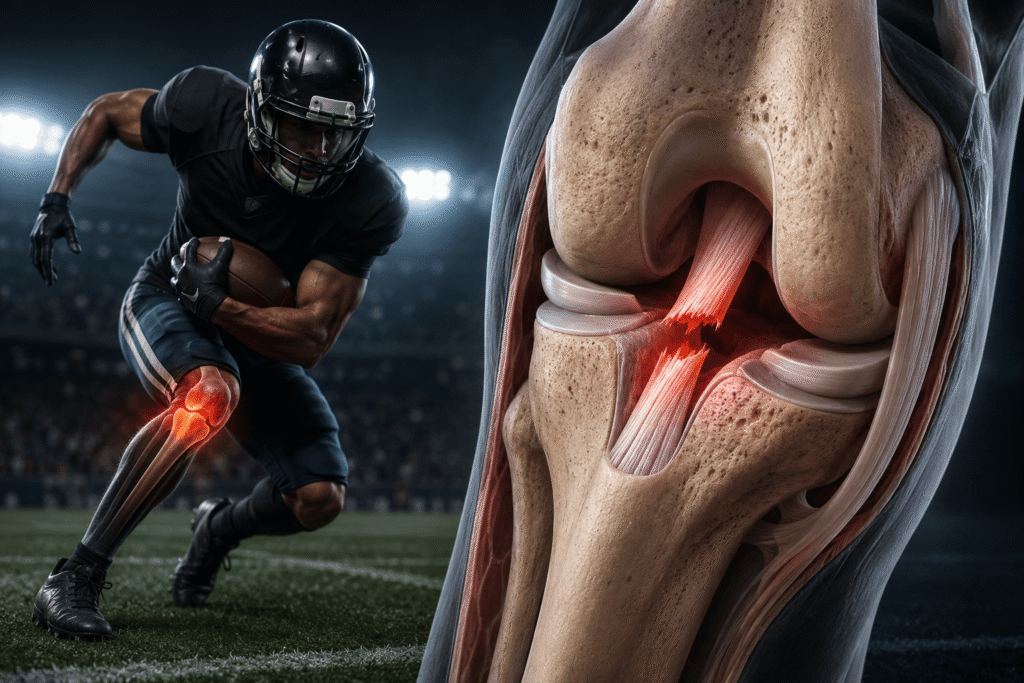
What Happens Inside the Body During an ACL Tear? NFL Injury Explained
Every NFL season, fans watch star players go down with devastating knee injuries. One of the most common and feared injuries is an ACL tear. While the injury often occurs in a split second, the damage inside the knee is far more complex than most people realize.
Understanding what happens during an ACL tear can help athletes, active individuals, and patients make informed decisions about treatment and recovery. Whether you’re a football player, weekend athlete, or simply interested in sports medicine, knowing how this injury affects the body is essential.
What Is the ACL?
The Anterior Cruciate Ligament (ACL) is one of the four major ligaments in the knee. It connects the femur (thigh bone) to the tibia (shin bone) and plays a critical role in stabilizing the knee joint.
The ACL helps:
- Prevent excessive forward movement of the tibia
- Control rotational movements of the knee
- Provide stability during cutting, pivoting, and jumping activities
- Support proper knee mechanics during athletic performance
Because of its role in stability, the ACL is especially vulnerable during high-intensity sports such as football, soccer, basketball, and skiing.
Why Are ACL Injuries Common in NFL Players?
NFL athletes perform explosive movements at incredible speeds. Sudden changes in direction, rapid acceleration, awkward landings, and direct contact create tremendous stress on the knee joint.
Common causes of NFL ACL injuries include:
- Sudden pivoting movements
- Hyperextension of the knee
- Direct impact from another player
- Landing improperly after a jump
- Twisting while the foot remains planted
These situations can place forces on the ACL that exceed its capacity, resulting in a partial or complete tear.
What Happens at the Moment of an ACL Tear?
An ACL tear occurs incredibly fast—often in less than a second.
When excessive force is applied to the knee, the ligament fibers begin to stretch beyond their normal limits. As the force increases, microscopic fibers start to fail. If the stress continues, larger portions of the ligament rupture until the ACL partially or completely tears.
Many athletes report hearing or feeling a “pop” at the moment of injury. This sound is often the ligament tearing under tension.
Inside the knee, several events happen simultaneously:
- The ACL fibers rupture
- Small blood vessels within the ligament tear
- Inflammation begins immediately
- Joint stability is compromised
- Surrounding tissues may also sustain damage
The body instantly recognizes the injury and activates its healing response.
The Immediate Inflammatory Response
Within minutes of an ACL injury, inflammation begins.
Blood from damaged vessels leaks into the joint space, causing swelling. Immune cells travel to the injured area to remove damaged tissue and initiate healing.
This inflammatory response often causes:
- Rapid swelling
- Pain
- Warmth around the joint
- Limited range of motion
- Difficulty bearing weight
Many patients notice significant swelling within the first few hours after the injury occurs.
Although inflammation is a natural part of healing, excessive inflammation can contribute to stiffness and discomfort during the early stages of recovery.

How Knee Stability Changes After an ACL Tear
The ACL serves as one of the knee’s primary stabilizers. When it tears, the knee loses a crucial support structure.
Without a functioning ACL, the tibia can move excessively relative to the femur. This instability often causes the knee to feel as though it may “give out” during movement.
Patients commonly experience:
- Knee buckling
- Instability when changing directions
- Difficulty running or jumping
- Loss of confidence in the injured leg
For professional athletes, this loss of stability can significantly impact performance and increase the risk of further injury.
Partial vs Complete ACL Tears
Not all ACL injuries are identical.
Partial ACL Tear
A partial tear occurs when some ligament fibers remain intact. Depending on the extent of the damage, the knee may retain a degree of stability.
Symptoms may include:
- Mild to moderate instability
- Swelling
- Pain during activity
- Reduced athletic performance
Complete ACL Tear
A complete tear occurs when the ligament is fully ruptured.
This often results in:
- Significant instability
- Difficulty participating in sports
- Increased risk of secondary injuries
- Greater functional limitations
Many NFL players who suffer complete ACL tears ultimately require surgical intervention before returning to competition.
Secondary Damage That Often Occurs
An ACL tear rarely occurs in isolation.
The same forces that damage the ACL frequently affect other structures within the knee.
Common associated injuries include:
Meniscus Tears
The meniscus acts as a shock absorber within the knee. ACL injuries often place excessive stress on the meniscus, leading to tears.
Cartilage Damage
The articular cartilage that covers joint surfaces may become damaged during the injury, increasing the long-term risk of arthritis.
MCL Injuries
The Medial Collateral Ligament (MCL) is another stabilizing structure that may be injured alongside the ACL.
Bone Bruising
Advanced imaging often reveals bone bruises caused by the impact forces generated during the injury.
These associated injuries can influence treatment decisions and recovery timelines.
How ACL Tears Are Diagnosed
Healthcare providers use a combination of physical examination and imaging studies to diagnose an ACL tear.
Common diagnostic methods include:
- Medical history review
- Physical examination
- Lachman Test
- Anterior Drawer Test
- Pivot Shift Test
- MRI imaging
MRI scans provide detailed images of soft tissues and help identify associated injuries involving the meniscus, cartilage, and other ligaments.
Accurate diagnosis is critical for developing an effective treatment plan.
Treatment Options for ACL Injuries
Treatment depends on factors such as age, activity level, injury severity, and patient goals.
Conservative Management
Some individuals can manage an ACL injury without surgery through:
- Physical therapy
- Strength training
- Bracing
- Activity modification
This approach is often considered for less active individuals or select cases involving partial tears.
ACL Reconstruction Surgery
Athletes who participate in high-demand sports frequently undergo ACL reconstruction surgery.
During the procedure, the damaged ligament is replaced using a graft from another tendon.
The goal is to restore stability and allow a safe return to athletic activities.
Regenerative Medicine Approaches
Interest in regenerative medicine continues to grow among athletes and active individuals.
Treatments such as Platelet-Rich Plasma (PRP) and stem cell-based therapies are being studied for their potential role in supporting tissue healing and recovery.
While research continues to evolve, regenerative medicine may play a supportive role in comprehensive ACL injury management depending on the individual case.
ACL Tear Recovery Timeline
Recovery from an ACL tear requires patience and commitment.
Although timelines vary, many athletes progress through the following stages:
- Weeks 1–6: Reduce swelling and restore mobility
- Months 2–4: Strength and stability training
- Months 4–6: Sport-specific rehabilitation
- Months 6–12: Return-to-play preparation
Professional athletes often spend 9–12 months recovering before returning to competitive sports.
Successful recovery depends on consistent rehabilitation, proper guidance, and gradual progression.
Final Thoughts
An ACL tear is far more than a simple knee injury. In a matter of seconds, the ligament ruptures, inflammation begins, stability is lost, and multiple structures inside the knee may be affected.
Whether the injury occurs on an NFL field or during a recreational game, understanding what happens inside the body during an ACL tear can help patients make informed decisions about treatment and recovery.
With advances in sports medicine, rehabilitation, and regenerative therapies, many individuals can successfully recover and return to the activities they enjoy. Early evaluation, accurate diagnosis, and a personalized treatment plan remain the keys to achieving the best possible outcome.
