
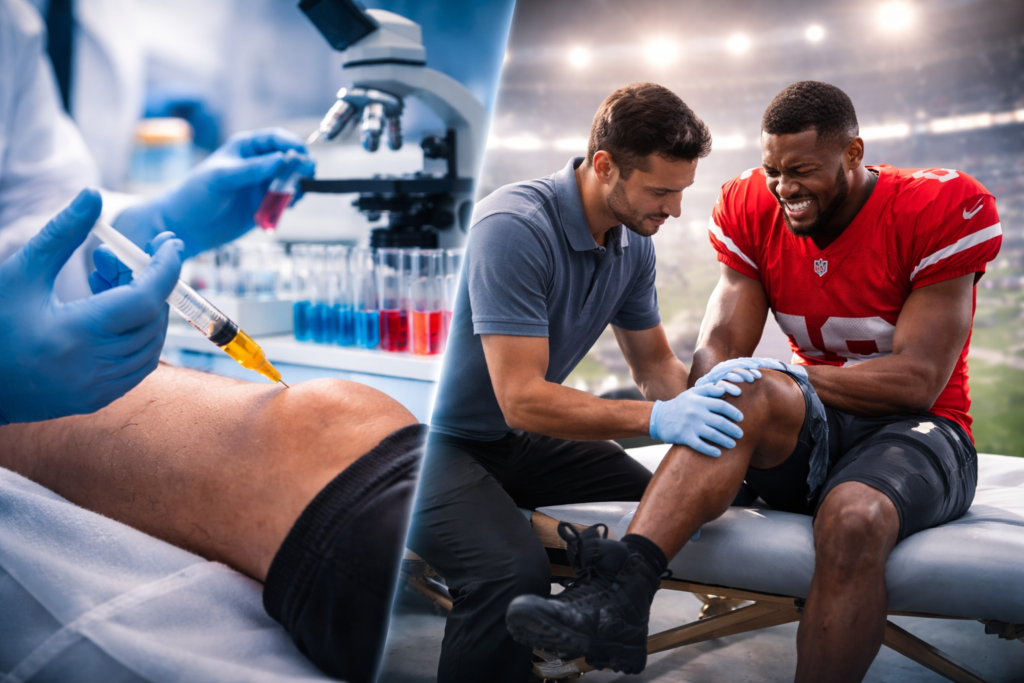
PRP vs Stem Cell Therapy in NFL Injuries What Actually Works
In professional football, injuries are not just common, they are expected. Every season in the National Football League, players deal with muscle tears, ligament damage, and joint problems that can impact their careers. The real question is not whether injuries happen, but how quickly and effectively athletes recover.
Over the past decade, regenerative medicine has changed the way sports injuries are treated. Two of the most talked about treatments are PRP therapy and stem cell therapy. Both promise faster healing without surgery, but which one actually works better for NFL level injuries?
This guide breaks down PRP vs stem cell therapy, how they work, and what really delivers results for athletes.
Understanding PRP Therapy
PRP stands for platelet rich plasma. It is a treatment that uses the patient’s own blood to promote healing. A small amount of blood is drawn, processed to concentrate the platelets, and then injected into the injured area.
Platelets are rich in growth factors that help repair tissue, reduce inflammation, and speed up recovery.
How PRP Works
PRP stimulates the body’s natural healing process. When injected into damaged tissue, it triggers repair mechanisms that might otherwise take much longer.
Common NFL Injuries Treated with PRP
PRP is widely used for
- Muscle strains
- Tendon injuries such as Achilles tendonitis
- Mild ligament sprains
- Joint inflammation
Benefits of PRP Therapy
PRP is popular among athletes because it is
- Minimally invasive
- Quick to perform
- Low risk since it uses your own blood
- Effective for early stage injuries
However, PRP has limitations. It mainly enhances healing rather than regenerating new tissue. This makes it less effective for severe injuries.
Understanding Stem Cell Therapy
Stem cell therapy takes regenerative medicine to the next level. Instead of just accelerating healing, it aims to regenerate damaged tissue.
Stem cells are unique because they can transform into different types of cells such as cartilage, muscle, or ligament tissue. These cells are typically sourced from bone marrow or fat tissue.
How Stem Cell Therapy Works
Stem cells are injected into the injured area where they help rebuild and repair damaged structures. They also release signals that reduce inflammation and improve healing.
Common NFL Injuries Treated with Stem Cells
Stem cell therapy is often used for
- Torn ligaments such as ACL injuries
- Cartilage damage in knees and joints
- Chronic tendon injuries
- Degenerative joint conditions
Benefits of Stem Cell Therapy
Stem cell therapy offers
- True tissue regeneration
- Long term healing rather than temporary relief
- Reduced need for surgery
- Potential to treat severe injuries
This is why many elite athletes turn to stem cell therapy when PRP is not enough.
PRP vs Stem Cell Therapy Key Differences
Understanding the difference between PRP and stem cell therapy is crucial when choosing the right treatment.
Healing Approach
PRP boosts the body’s natural healing process. Stem cells actively rebuild damaged tissue.
Best Use Cases
PRP is ideal for mild to moderate injuries. Stem cell therapy is better suited for severe or chronic conditions.
Recovery Time
PRP often provides faster short term relief. Stem cell therapy may take longer initially but delivers deeper and longer lasting results.
Effectiveness
PRP works well for inflammation and minor tissue damage. Stem cells are more effective for structural repair and regeneration.

What Do NFL Players Actually Use
In the National Football League, recovery speed is everything. Players often cannot afford long downtime.
Many athletes start with PRP therapy because it is quick and effective for minor injuries. However, when injuries are more serious or recurring, stem cell therapy becomes the preferred option.
Some well known cases have shown athletes extending their careers by using regenerative treatments instead of opting for surgery. While not every case is publicly documented, regenerative medicine has become a standard part of sports recovery.
Which Treatment Actually Works Better
The honest answer is that it depends on the injury.
PRP works best for
- Early stage injuries
- Inflammation
- Minor tendon and muscle issues
Stem cell therapy works best for
- Severe ligament damage
- Cartilage loss
- Chronic injuries that do not heal
If the goal is quick recovery and return to play, PRP may be sufficient. If the goal is long term healing and avoiding surgery, stem cell therapy often delivers better outcomes.
For NFL level injuries, where damage is often severe, stem cell therapy is generally considered the more powerful solution.
The Future of NFL Injury Treatment
Regenerative medicine is evolving rapidly. Teams and athletes are investing more in non surgical solutions that reduce downtime and improve performance.
PRP and stem cell therapy are just the beginning. Advances in Regenerative Medicine are opening the door to even more advanced treatments that could change how injuries are managed in professional sports.
The focus is shifting from simply treating injuries to fully restoring the body.
Final Thoughts
PRP vs stem cell therapy is not about choosing one over the other. It is about using the right treatment at the right time.
PRP is a great starting point for minor injuries and quick recovery. Stem cell therapy is the stronger option for serious damage and long term healing.
For NFL players and high performance athletes, combining both treatments strategically can provide the best results.
